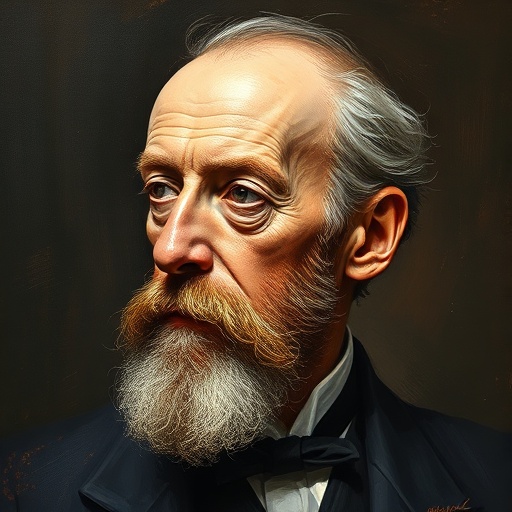
John Stuart Mill
Utilitarianism, liberty
Sayings by John Stuart Mill
It is better to be a human being dissatisfied than a pig satisfied; better to be Socrates dissatisfied than a fool satisfied.
The only purpose for which power can be rightfully exercised over any member of a civilized community, against his will, is to prevent harm to others. His own good, either physical or moral, is not a sufficient warrant.
The peculiar evil of silencing the expression of an opinion is, that it is robbing the human race; posterity as well as the existing generation; those who dissent from the opinion, still more than those who hold it. If the opinion is right, they are deprived of the opportunity of exchanging error for truth: if wrong, they lose, what is almost as great a benefit, the clearer perception and livelier impression of truth, produced by its collision with error.
Originality is the one thing which unoriginal minds cannot feel the use of.
A person may cause evil to others not only by his actions but by his inaction, and in either case he is justly accountable to them for the injury.
The worth of a State, in the long run, is the worth of the individuals composing it.
If all mankind minus one were of one opinion, and only one person were of the contrary opinion, mankind would be no more justified in silencing that one person, than he, if he had the power, would be justified in silencing mankind.
Bad men need nothing more to compass their ends, than that good men should look on and do nothing.
The government of a country, by a part of the people, is, for all purposes of good government, an equally objectionable form of government with that of a single despot.
Men are not more zealous for truth than they often are for error, and a sufficient application of legal or even of social penalties will generally succeed in stopping the propagation of either.
The object of this Essay is to assert one very simple principle, as entitled to govern absolutely the dealings of society with the individual in the way of compulsion and control, whether the means used be physical force in the form of legal penalties, or the moral coercion of public opinion. That principle is, that the sole end for which mankind are warranted, individually or collectively, in interfering with the liberty of action of any of their number, is self-protection.
The only way in which a human being can make some approach to knowing the whole of a subject, is by hearing what can be said about it by persons of every variety of opinion, and studying all modes in which it can be looked at by every character of mind.
It is not by wearing down into uniformity all that is individual in themselves, but by cultivating it and calling it forth, within the limits imposed by the rights and interests of others, that human beings become a noble and beautiful object of contemplation.
The greatest dangers to liberty lurk in insidious encroachment by men of zeal, well-meaning but without understanding.
No one can be a great thinker who does not recognize, that as a thinker it is his first duty to follow his intellect to whatever conclusions it may lead.
Conformity is the jailer of freedom and the enemy of growth.
The general tendency of things throughout the world is to render mediocrity the ascendant power among mankind.
Every man who is not a fool knows that a bad government is a great evil; but that there is no greater evil than a weak government.
The 'self-regarding' offences, if they are to be called offences, are not to be punished at all.
The only security against error is in the discussion of every subject, and the careful examination of all arguments, by which it can be supported or opposed.