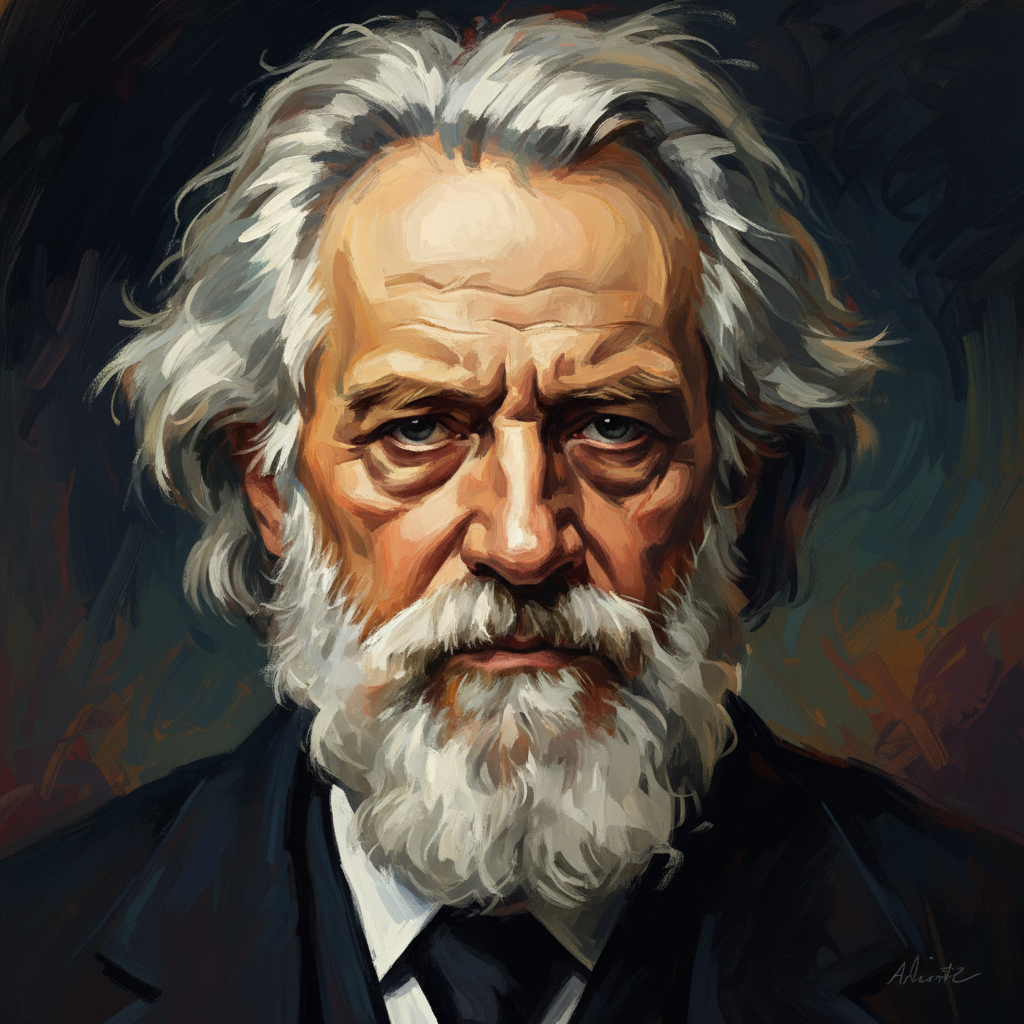
Arthur Schopenhauer
Pessimist philosophy
Sayings by Arthur Schopenhauer
The greatest achievements of the human mind are generally received with distrust.
We can come to look upon the deaths of our enemies with as much regret as we feel for those of our friends, namely, when we miss their existence as witnesses to our success.
The safest way of not being very miserable is not to expect to be very happy.
A man's delight in looking forward to and hoping for some particular satisfaction is a part of the pleasure flowing out of it, enjoyed in advance. But this is afterward deducted, for the more we look forward to anything the less we enjoy it when it comes.
The ultimate aim of all love affairs ... is more important than all other aims in man's life; and therefore it is quite worthy of the profound seriousness with which everyone pursues it.
Hatred comes from the heart; contempt from the head; and neither feeling is quite within our control.
The life of an individual is a constant struggle, and not merely a metaphorical one against want or boredom, but also an actual struggle against other people. He discovers adversaries everywhere, lives in continual conflict and dies with sword in hand.
It is in the treatment of trifles that a person shows what they are.
There is no doubt that life is given us, not to be enjoyed, but to be overcome; to be got over.
Almost all of our sorrows spring out of our relations with other people.
The world is a prison in which solitary confinement is preferable.
Women are directly adapted to act as the nurses and educators of our childhood, for the simple reason that they are themselves childish, frivolous and short-sighted; in a word, are big children all their lives, a kind of intermediate stage between the child and the man, who is an adult in the true sense of the word.
The nobler and more perfect a thing is, the later and slower it is in arriving at maturity. A man reaches the maturity of his reason and mental powers hardly before the age of eight-and-twenty; a woman when she is eighteen; but then it is only a woman's reason. That is why women remain children their whole life long, never seeing anything but what is before their eyes, clinging to the present, taking appearance for reality, and preferring trifles to the most important concerns.
Women are the sexus sequior, the second sex in every respect, inferior to the first: we should therefore consider their weaknesses with some forbearance. It is because of these weaknesses that they are called the fair sex, for they are neither intellectual, nor moral, nor aesthetic, but only fair.
It is only the man whose intellect is clouded by his sexual impulses that could give the name of fair sex to that undersized, narrow-shouldered, broad-hipped, and short-legged race: for the whole beauty of this sex is bound up with this impulse.
The greatest absurdity is to think that women are capable of artistic or scientific production. They are not.
With women, nature has made a blunder.
They are the sex which pays the debt of life, not by what it does, but by what it suffers. The pains of child-bearing, the care of the child, the constant dependence upon the man, and the short duration of their beauty, all combine to make their lot a hard one.
The fundamental defect of the female character is a lack of the sense of justice. This arises from the fact that they are deficient in the faculty of reason and reflection, and are therefore unable to take a comprehensive view of things, but are guided by their momentary impulses and feelings.
The only way to be happy is to not be born.