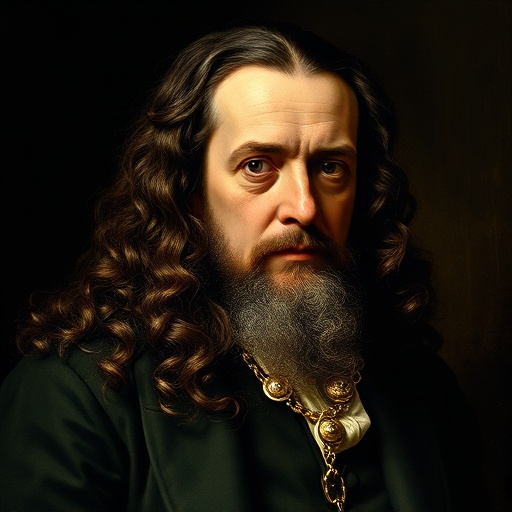
Gottfried Wilhelm Leibniz
Calculus, optimism
Sayings by Gottfried Wilhelm Leibniz
The happier the man, the less he needs to be amused; like a healthy man who does not need to be drugged.
I have said more than once that I would give all my books to have the fame of having discovered a single useful truth for the good of mankind.
The nature of the monad is representative; consequently, nothing can limit it to represent only a part of things.
It is a great evil to be in doubt about the most important things.
Justice is nothing else than the charity of the wise.
Every present state of a simple substance is a natural consequence of its preceding state, in such a way that its present is big with its future.
I have found that most of the sects are right in a good part of what they assert, but not so much in what they deny.
To be is to be one.
There is a world of creatures, living beings, animals, entelechies, souls, in the least part of matter.
The mind is not a tabula rasa but a block of marble which has veins, and these veins determine the shape that the statue can take.
The true method of advancing the sciences is to first lay solid foundations.
I have said that the soul is a little world where distinct ideas represent God and confused ones represent the universe.
For the glory of God is the ultimate end of all things.
It's easier to be original and foolish than original and wise.
The pleasure we obtain from music comes from counting, but counting unconsciously. Music is nothing but unconscious arithmetic.
I do not like X as a symbol for multiplication, as it is easily confounded with x.
There is nothing without a reason.
The present is saturated with the past and pregnant with the future.
There are two kinds of truths: those of reasoning and those of fact.
Nothing is necessitated whose opposite is possible.