What it means
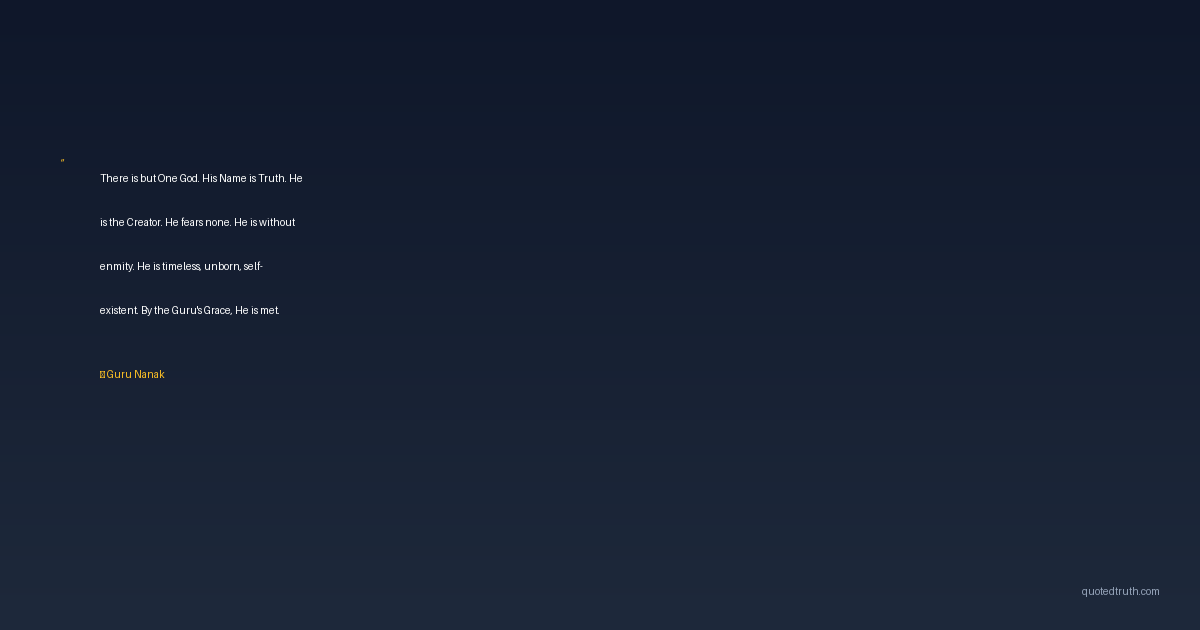
Reality rests on a single divine source that is real, not imagined. This source made everything, holds no fear, carries no hatred toward anyone, exists outside of time, was never born, and needs nothing to sustain itself. A person cannot reach this truth through ritual or cleverness alone; it becomes known only when a true teacher opens the way and grace makes understanding possible.
Relevance to Guru Nanak
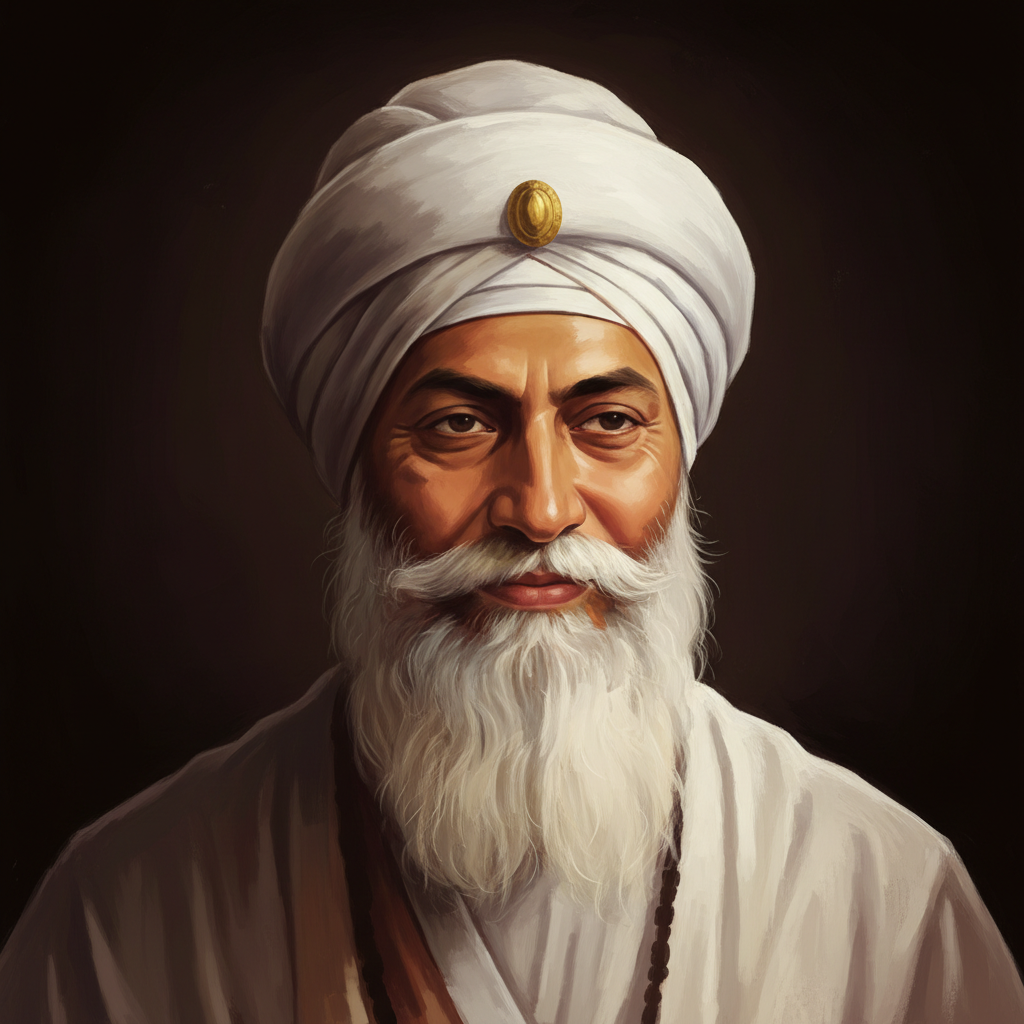
This is the Mul Mantar, the opening verse Guru Nanak composed to summarize Sikh belief. After his river vision around 1499, he declared there is no Hindu, no Muslim, only one humanity under one God. He traveled across South Asia, Tibet, and Arabia teaching this oneness, rejected caste and idol worship, and insisted liberation comes through a living Guru's guidance rather than priestly intermediaries.
The era
Nanak lived 1469-1539 in Punjab during the collapse of the Delhi Sultanate and Babur's 1526 Mughal invasion. Hindu-Muslim tension was sharp, caste hierarchy was rigid, and religious identity dictated social standing. Brahmins controlled Hindu ritual while Islamic clerics policed orthodoxy. By declaring one formless God accessible to anyone through grace, Nanak cut across both systems, offering a third path that needed no temple, mosque, priest, or birth privilege.
AI-generated insights based on extensive research and information for context. Factual errors? Email [email protected].