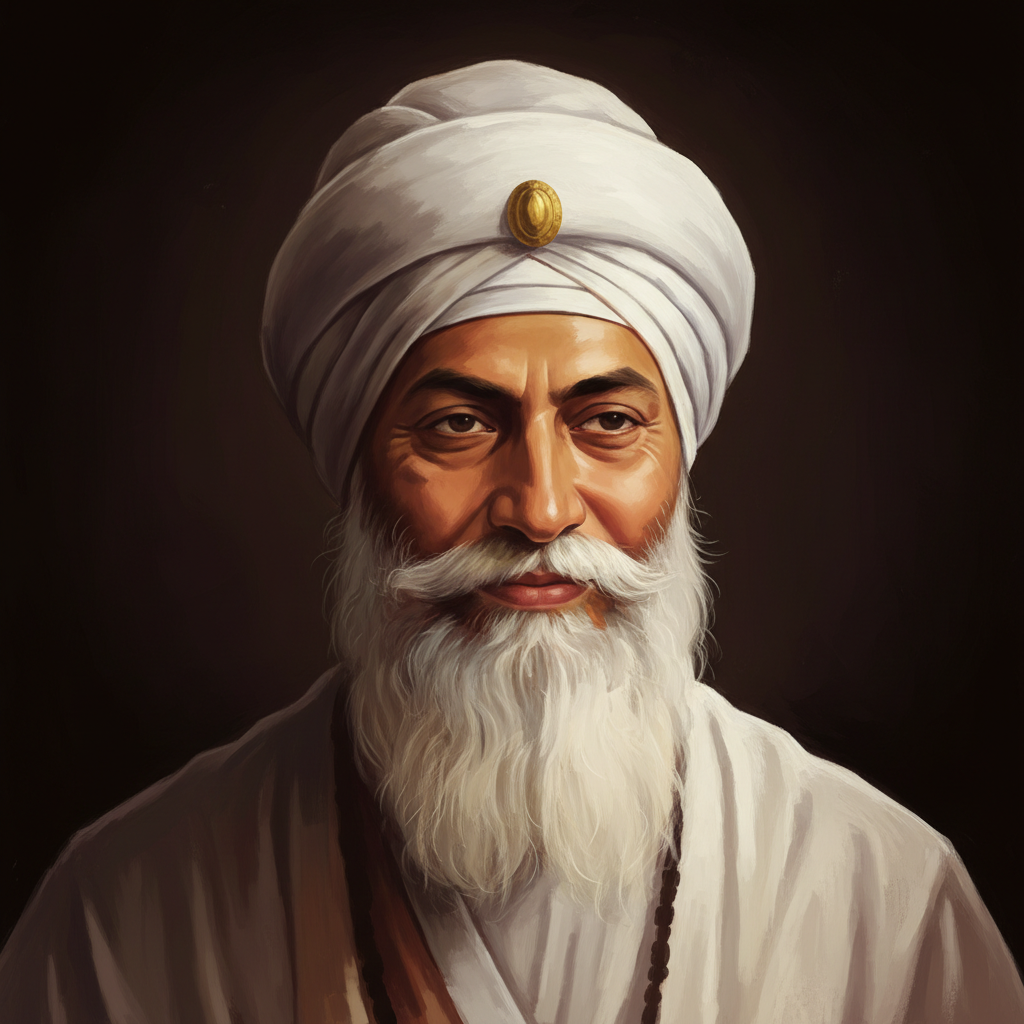
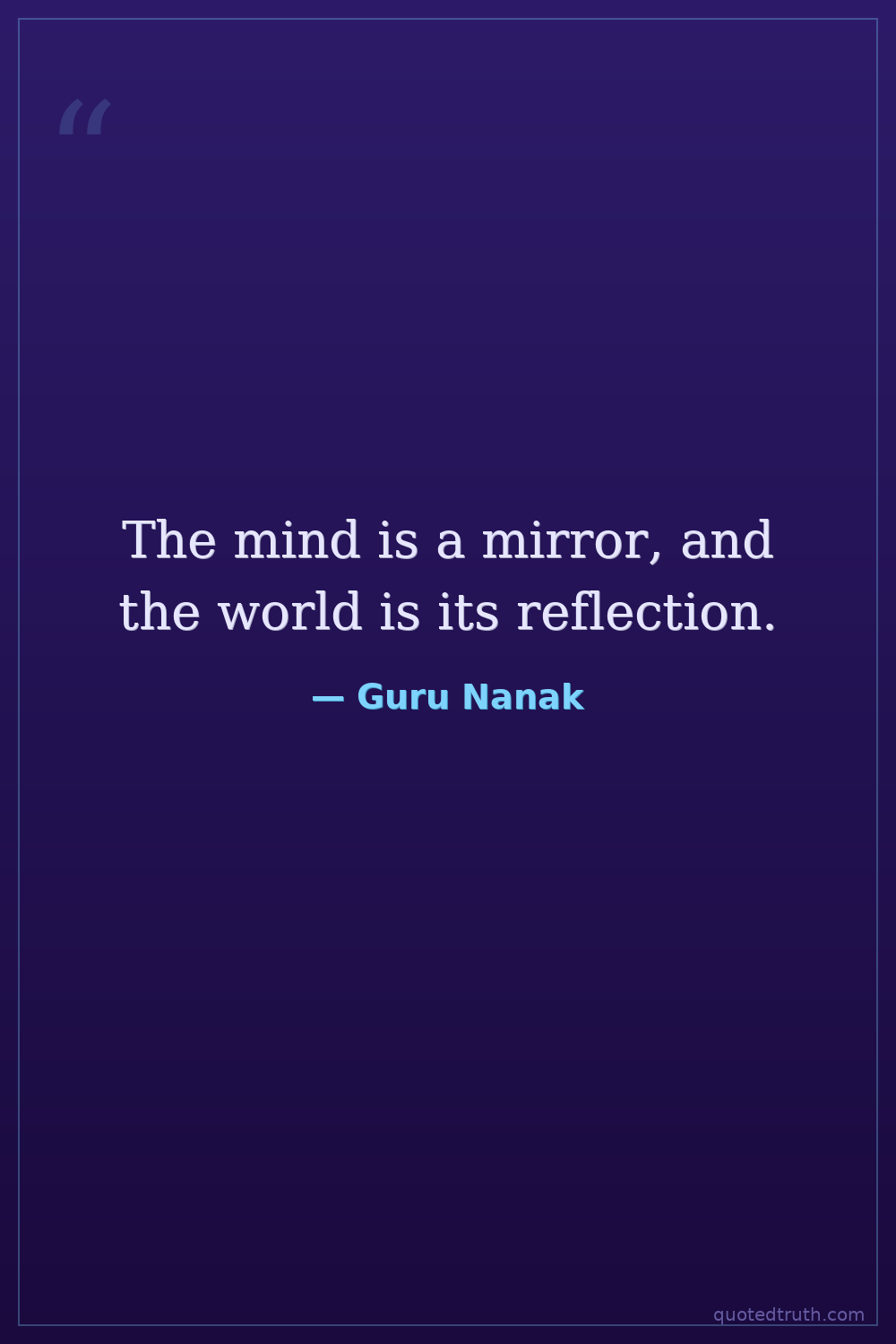
Guru Nanak — "The mind is a mirror, and the world is its reflection."
The mind is a mirror, and the world is its reflection.
The mind is a mirror, and the world is its reflection.
Click any product to generate a realistic preview. Up to 3 at a time.
* Initial load can take up to 90 seconds — revising the preview in another color is nearly instant.
"The world is burning in the fire of desire, greed, attachment, and ego."
"The Guru is the ladder, the boat, the raft, the ferryman, the ship, and the captain."
"The greatest gift is to share. Especially if it's your last piece of samosa."
"The greatest joy is to be found in the Lord's Name."
"The greatest treasure is the Name of God."
Founder of Sikhism and the first of the Ten Sikh Gurus, whose teachings of one universal God and rejection of caste shaped Punjab. Closely associated with Kabir (mystical poet whose verses appear in the Sikh Guru Granth Sahib). For an intellectual contrast, see Brahmanical orthodoxy, the Hindu caste-and-ritual establishment of his era — Sikhism was founded as a deliberate alternative to both Hindu ritual hierarchy and Islamic exclusivism — Nanak's universalism was a structural rejection of caste and priestly mediation.
Found in 1 providers: grok
1 source checked
Your inner state shapes how you perceive everything around you. The mind works like a polished surface: when it's clean and calm, reality appears clearly, but when it's clouded by ego, anger, or greed, the world looks distorted. External circumstances aren't the problem; what you experience is largely a projection of your own thoughts, habits, and emotional conditioning. Change the mirror, and the reflection changes with it.
Guru Nanak, founder of Sikhism, taught that liberation comes through inner discipline, meditation on the divine name (Naam Simran), and cleansing the mind of the five thieves: lust, anger, greed, attachment, and ego. As a traveling teacher who rejected empty ritual, he emphasized that true worship is internal. This saying reflects his core conviction that transformation begins within the individual consciousness, not through pilgrimage, caste, or ceremony.
Guru Nanak lived 1469-1539 in Punjab during Mughal expansion and entrenched Hindu-Muslim tension. Ritualism, caste oppression, and sectarian violence defined daily life, and ordinary people were told salvation required priests, pilgrimages, or rigid orthodoxy. Nanak's travels across India, Tibet, and Arabia exposed him to competing dogmas. By locating truth in the purified mind rather than external authority, he offered a radical equalizing message that undercut both Brahminical gatekeeping and clerical power structures.
AI-generated insights based on extensive research and information for context. Factual errors? Email [email protected].
Your cart is empty