What it means
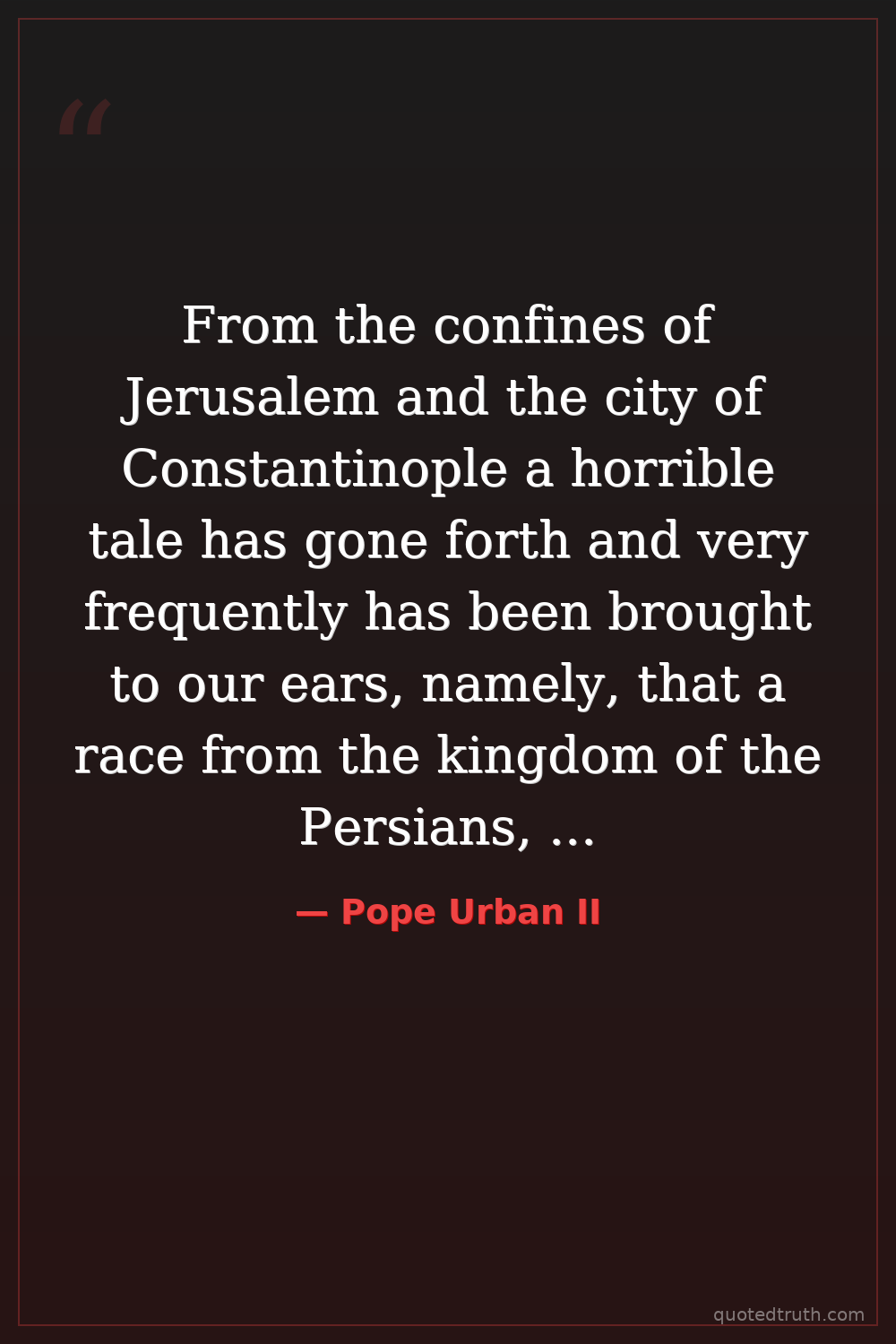
Reports from Jerusalem and Constantinople describe a people from Persia — portrayed as godless and barbaric — invading and destroying Christian territories through massacre, looting, and arson. The passage functions as propaganda: by labeling the enemy as spiritually alien and monstrous, it frames military response as a religious obligation. The rhetorical escalation from 'horrible tale' to catalogued atrocities is designed to provoke outrage and galvanize listeners into immediate action.
Relevance to Pope Urban II
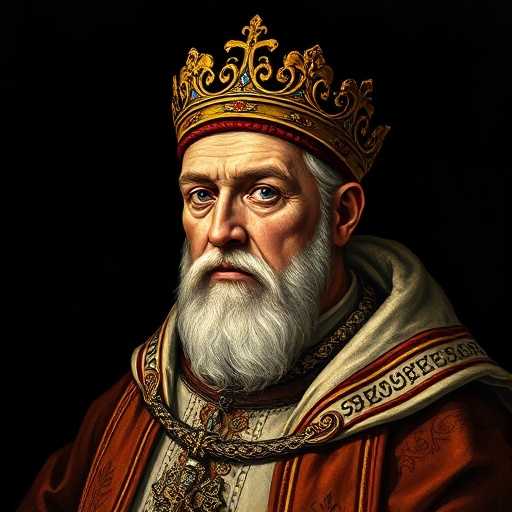
Urban II delivered this at the Council of Clermont in 1095 as a Gregorian reformer committed to unifying fractured Christendom under papal authority. Responding to Byzantine Emperor Alexios I's plea for military aid against Seljuk encroachment, he channeled his Benedictine theological training into incendiary rhetoric. The dehumanizing language reflects his conviction that defending holy sites was a spiritual imperative — and a strategic vehicle for consolidating Rome's moral supremacy over rival secular rulers.
The era
In 1095, the Seljuk Turks had dominated Anatolia since crushing Byzantium at Manzikert in 1071, severing pilgrimage routes to Jerusalem. The Great Schism of 1054 had split Eastern and Western Christianity, yet Byzantium still appealed to Rome for military rescue. Western Europe's feudal lords warred constantly among themselves. Urban's speech redirected that violent energy outward — forging a unified 'Christendom' narrative at precisely the moment when no such unity actually existed.
AI-generated insights based on extensive research and information for context. Factual errors? Email [email protected].