What it means
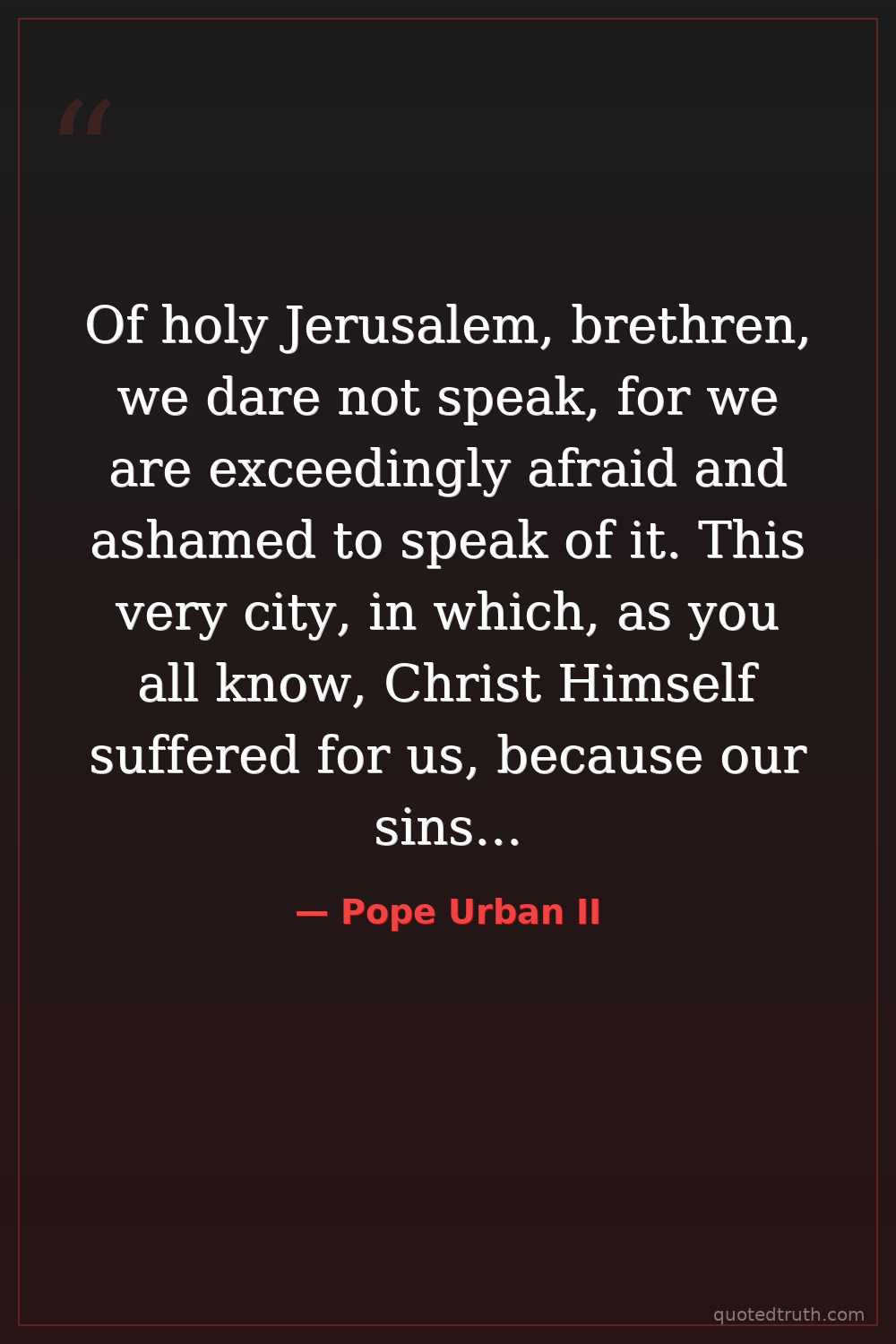
Jerusalem, where Christ was crucified, has fallen under non-Christian rule, and Urban frames this as collective Christian shame. By saying 'our sins demanded it,' he ties the city's loss to moral failure, making every listener personally complicit. The city is not merely lost politically—it has been 'polluted' and stripped of Christian worship. He transforms a geopolitical reality into a spiritual emergency requiring immediate action from every faithful Christian.
Relevance to Pope Urban II
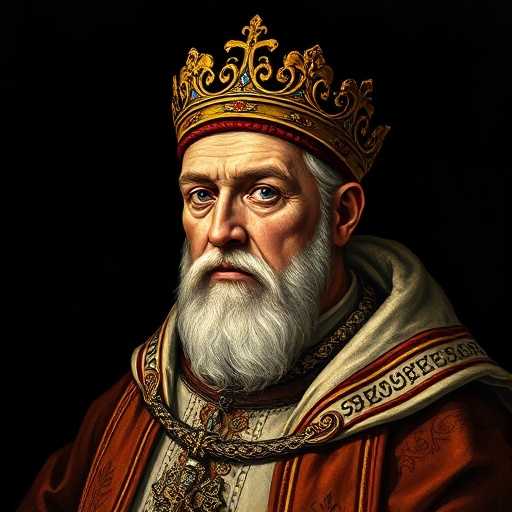
Urban II, born Odo of Châtillon, was a Benedictine monk and reformist pope who spent his pontificate fighting to restore church authority eroded by the Investiture Controversy. This speech at Clermont in November 1095 was his masterstroke—redirecting fractious European nobility toward a shared sacred cause. His monastic discipline and conviction that the pope led all Christendom made him uniquely positioned to frame Jerusalem's loss as a personal affront demanding collective penance and military response.
The era
After Seljuk Turks crushed Byzantine forces at Manzikert in 1071, Christian pilgrimage routes to Jerusalem became dangerous and unreliable. Emperor Alexios I appealed to Rome in 1095 for military aid. Meanwhile, Western Europe's feudal knights—trained for violence but constrained by the Church's Peace of God movement—needed a sanctioned outlet. Urban's speech fused pilgrimage piety with holy war theology, creating the ideological foundation that mobilized roughly 100,000 soldiers within two years.
AI-generated insights based on extensive research and information for context. Factual errors? Email [email protected].