What it means
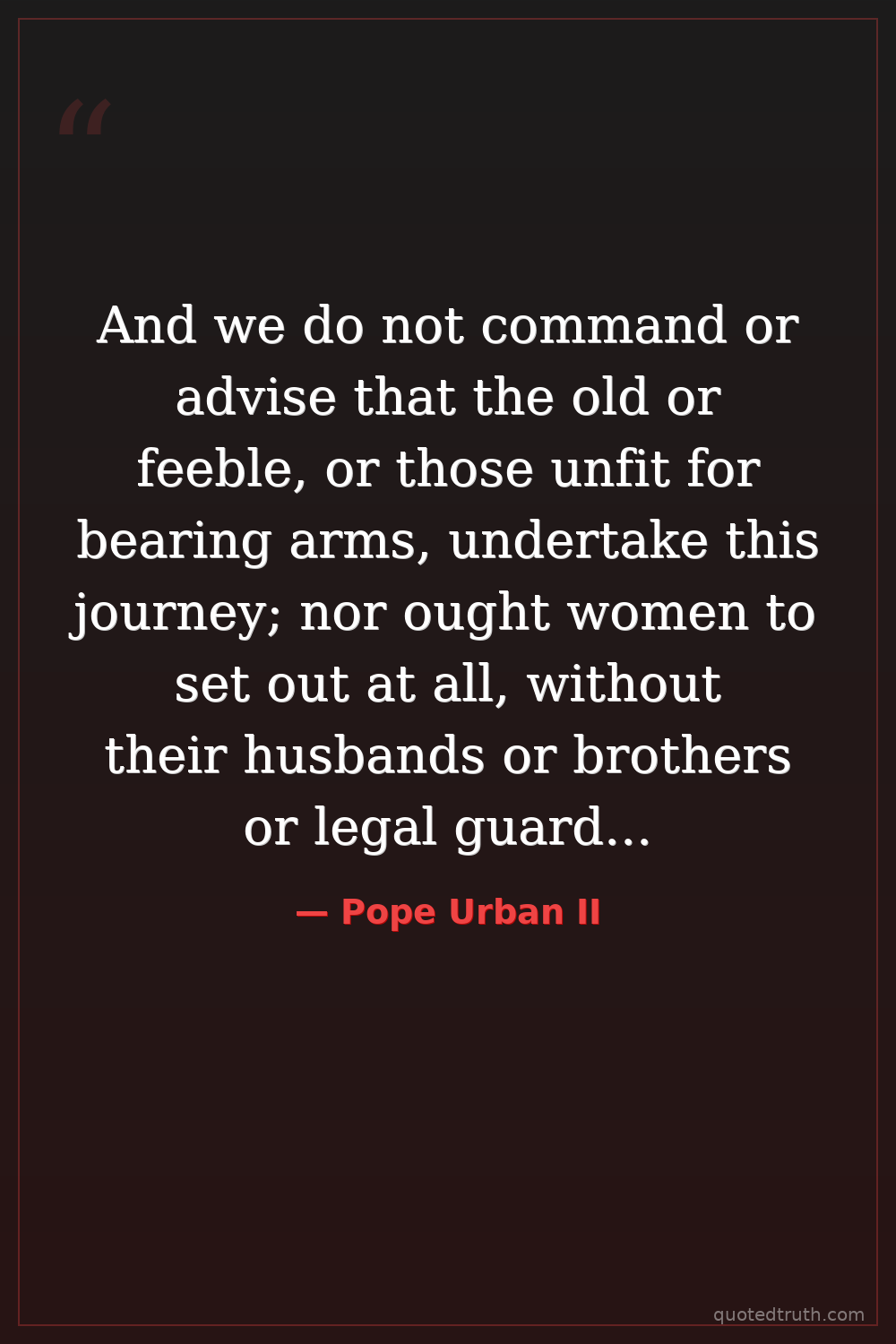
The quote establishes strict eligibility for crusading: only physically capable men should join the military campaign to reclaim Jerusalem. The elderly, disabled, and women without male escorts are excluded — not for moral reasons, but practical ones. They would slow the march, consume limited supplies, and contribute nothing to combat strength. It's a military fitness filter framed in official proclamation language, prioritizing campaign effectiveness over broad participation in a dangerous, multi-year armed pilgrimage.
Relevance to Pope Urban II
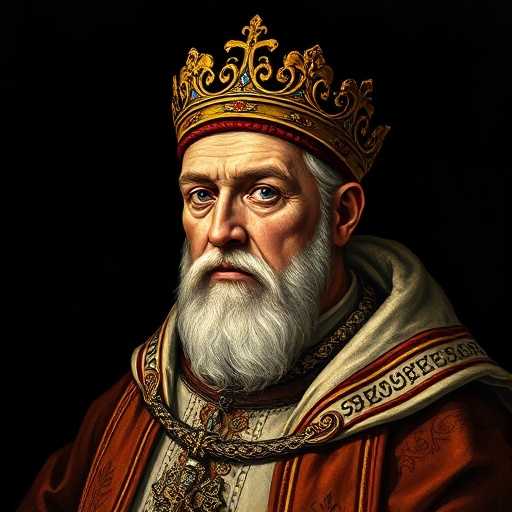
Urban II, a former Benedictine monk and church reformer, preached the First Crusade at Clermont in 1095 with both spiritual fervor and organizational precision. His administrative reforms revealed a pragmatic streak: the Crusade was simultaneously a penitential pilgrimage and a military expedition requiring success. Excluding non-combatants reflects his calculated mindset. His papal authority allowed him to dictate participation terms in an act framed as sacred duty, blending ecclesiastical command with logistical hard-headedness.
The era
After the Seljuk Turks crushed Byzantine forces at Manzikert in 1071, Christian access to Jerusalem grew precarious. Feudal medieval society assigned women legal identity through male kin — guardianship was structural norm, not mere bias. Crusading campaigns stretched years, requiring fast-moving, combat-capable columns; non-combatants endangered entire forces. The Church, amid the Investiture Controversy, was asserting moral authority over secular military affairs. Urban's directive merged genuine logistical necessity with the Church's claim to govern Christian conduct.
AI-generated insights based on extensive research and information for context. Factual errors? Email [email protected].