What it means
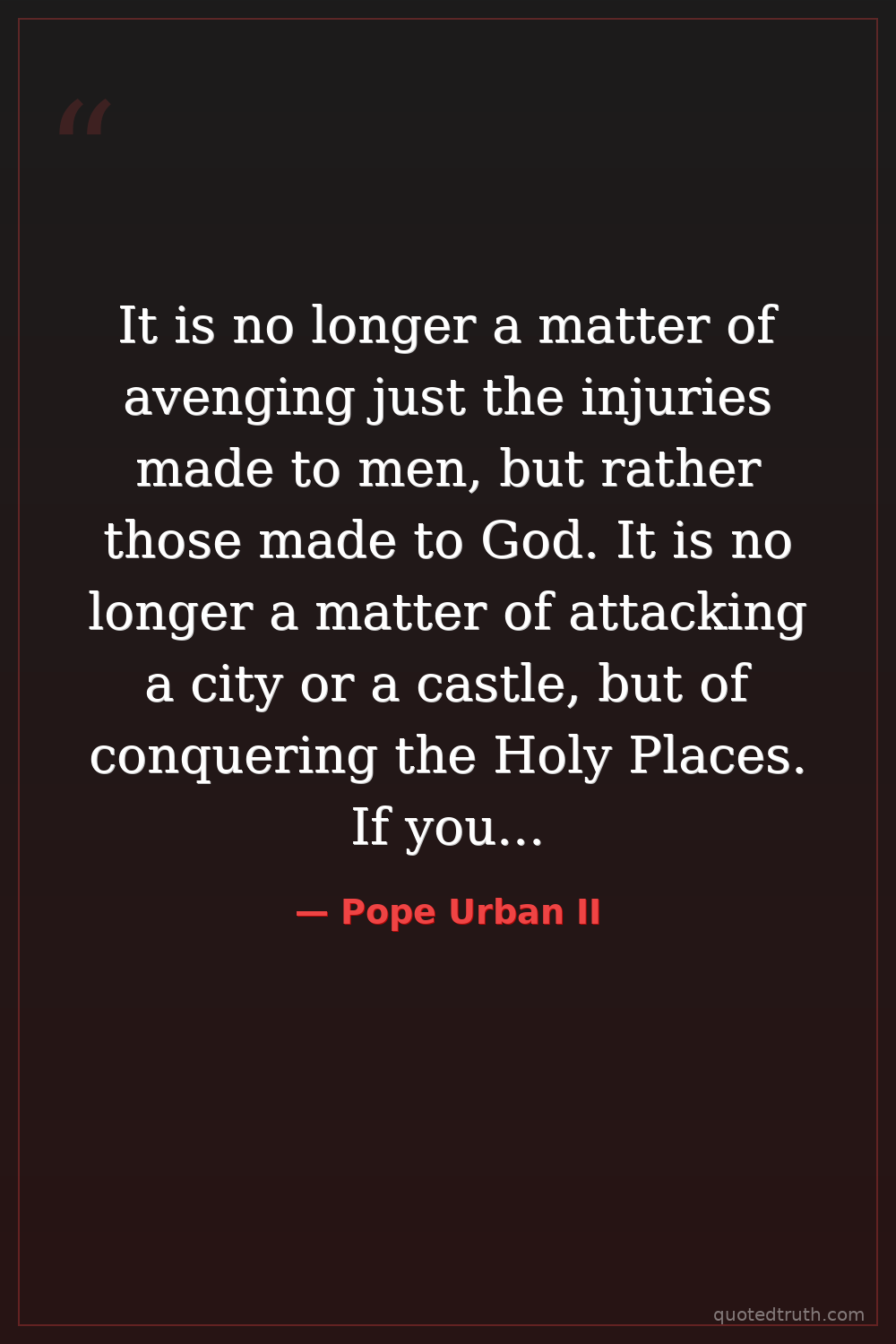
This is a call to holy war, framing military conquest as divine duty rather than personal revenge or territorial ambition. The speaker elevates the stakes beyond earthly grievances — fighting not for land or honor, but for God himself. The promised rewards are both spiritual (heaven's blessing) and material (Asian kingdoms), making the appeal simultaneously religious and deeply self-interested for the audience.
Relevance to Pope Urban II
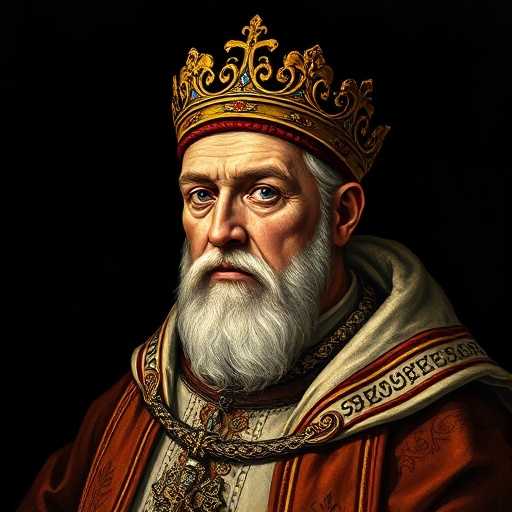
Urban II delivered this at the Council of Clermont in 1095, launching the First Crusade. As pope, his authority rested on being God's earthly representative, so framing war as God's personal injury was a natural extension of papal power. Urban needed to unite fractious European nobility under Church leadership, and promising heavenly rewards alongside earthly kingdoms was his masterstroke of political theology.
The era
In 1095, the Seljuk Turks had seized Jerusalem and were threatening Byzantine Constantinople. European Christendom viewed the Holy Land as literally sacred territory, not mere geography. The feudal nobility needed ideological justification for costly campaigns. Meanwhile, the pope was locked in power struggles with secular rulers, making a pan-Christian military enterprise under Church command politically transformative for papal authority.
AI-generated insights based on extensive research and information for context. Factual errors? Email [email protected].