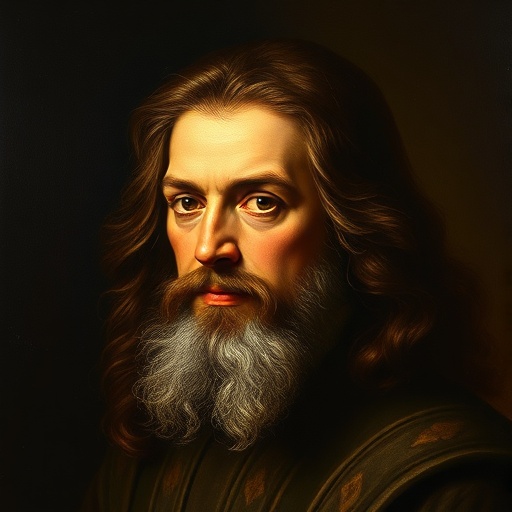
Leonardo da Vinci — "Experience does not err. Only your judgments err by expecting from her what is n…"
Experience does not err. Only your judgments err by expecting from her what is not in her power.
Experience does not err. Only your judgments err by expecting from her what is not in her power.
Click any product to generate a realistic preview. Up to 3 at a time.
* Initial load can take up to 90 seconds — revising the preview in another color is nearly instant.
"Where the spirit does not work with the hand, there is no art."
"Painting is poetry that is seen rather than felt, and poetry is painting that is felt rather than seen."
"Oh, how many times have I been deceived by my own opinions!"
"Nature never breaks her own laws."
"Blind ignorance misleads us and makes us content with this empty life."
From his notebooks, a statement on the infallibility of experience and fallibility of human interpretation.
Date: Undated, but from his lifetime (1452-1519)
GeneralFound in 1 providers: gemini
1 source checked
Reality and direct observation never deceive us — they simply present what they are. Mistakes arise when human judgment imposes false expectations on what experience can actually reveal. If you ask nature a question it cannot answer, that failure belongs to you, not to nature. Align your expectations with what evidence can genuinely show, and you find truth; mismatch them, and you blame reality for your own confusion.
Da Vinci filled thousands of notebook pages with direct observation — dissecting corpses to understand anatomy, watching water flow to grasp fluid dynamics, studying birds to conceive flying machines. He trusted his eyes over inherited doctrine. This quote crystallizes his lifelong method: reality is the ultimate teacher, but you must ask it the right questions. His incomplete projects often reflected overreaching what contemporary materials and physics could actually deliver.
Da Vinci lived during the Italian Renaissance (1452–1519), when European thought was shifting from medieval scholasticism — which prioritized ancient texts and Church authority over observation — toward direct empirical inquiry. This was the era when Copernicus challenged geocentrism and Vesalius corrected Galen through dissection. Elevating experience over inherited judgment was intellectually radical, aligning with a broader revolution that would directly birth the rigorous Scientific Method of the following century.
AI-generated insights based on extensive research and information for context. Factual errors? Email [email protected].
Your cart is empty