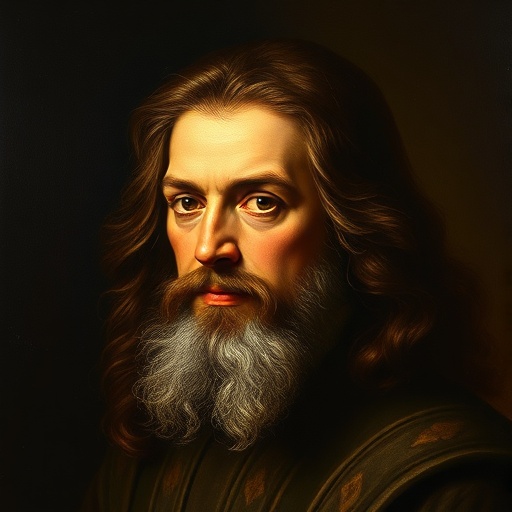
Leonardo da Vinci — "Nature never breaks her own laws."
Nature never breaks her own laws.
Nature never breaks her own laws.
Click any product to generate a realistic preview. Up to 3 at a time.
* Initial load can take up to 90 seconds — revising the preview in another color is nearly instant.
"The water that you touch in a river is the last of that which has passed, and the first of that which comes; so with present time."
"Study without desire spoils the memory, and it retains nothing that it takes in."
"An average human looks without seeing, listens without hearing, touches without feeling, eats without tasting, moves without physical awareness, inhales without awareness of odour or fragrance, and ta…"
"Reprove a friend in secret, but praise him openly."
"No human investigation can be called true science if it doesn't pass through mathematical demonstrations."
Found in 1 providers: grok
1 source checked
Nature operates through unbreakable, consistent principles — gravity falls the same way every time, water always flows downhill, biology follows predictable rules. No exception exists where nature contradicts itself. What appears miraculous or chaotic simply reflects our incomplete understanding. The universe is perfectly self-consistent: study it carefully enough and you find the same laws operating everywhere, without fail. Understanding these laws gives humans the power to work with, not against, reality.
Da Vinci filled thousands of notebook pages studying water currents, wing mechanics, human anatomy, and rock strata — always seeking underlying rules. He designed flying machines by dissecting birds, mapped muscles to understand movement, and traced rivers to predict floods. His conviction that nature's laws were discoverable and consistent drove every project. This quote is his epistemology in nine words: observe faithfully, and nature will never mislead you.
In 15th-century Italy, Church doctrine held that God could suspend natural law through miracles, and scholastic philosophy still dominated intellectual life. Da Vinci's assertion — written privately in his notebooks, never published — was quietly radical. The Scientific Revolution had not yet begun; Copernicus would publish his heliocentric model only in 1543. Against this backdrop, insisting that nature is utterly consistent and law-governed was a foundational act for modern empirical science.
AI-generated insights based on extensive research and information for context. Factual errors? Email [email protected].
Your cart is empty