Pope Urban II — "What shall I say of the appalling violation of women, of which it is more evil t…"
What shall I say of the appalling violation of women, of which it is more evil to speak than to keep silent?
What shall I say of the appalling violation of women, of which it is more evil to speak than to keep silent?
Click any product to generate a realistic preview. Up to 3 at a time.
* Initial load can take up to 90 seconds — revising the preview in another color is nearly instant.
"For the land which you inhabit, shut in on all sides by the seas and surrounded by the mountain peaks, is too narrow for your large population."
"The royal city, situated at the center of the world, is now held captive by His enemies, and is enslaved by peoples who do not know God."
"Let those who have been accustomed unjustly to wage private warfare against the faithful now go against the infidels and end with victory this war which should have been begun long ago."
"All who are going to go into battle should wear the sign of the cross on their garments."
"O most valiant soldiers and descendants of invincible ancestors, do not degenerate, but recall the valor of your forefathers."
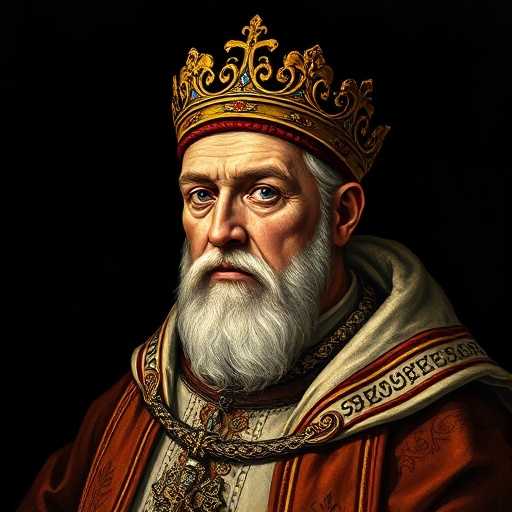
Pope (1088-1099) whose Council of Clermont speech (November 1095) launched the First Crusade — the founding event of nine centuries of Christian-Muslim military conflict. Closely associated with Pope Gregory VII (his predecessor on papal-imperial reform). For an intellectual contrast, see Saladin, Kurdish-Muslim Sultan of Egypt and Syria (1138-1193) — Saladin recaptured Jerusalem in 1187, undoing the First Crusade Urban II launched 92 years earlier. Saladin's chivalrous treatment of Christian prisoners became the canonical Muslim counter-image to Crusader brutality. The cleanest before/after pairing of the Crusades' moral arc.
Speech at the Council of Clermont, alluding to atrocities committed by the Turks.
Date: 1095
Life & DeathFound in 1 providers: gemini
1 source checked
The speaker expresses moral outrage at sexual violence through rhetorical paralipsis — naming an atrocity by declaring it too terrible to name. The paradox drives the point deeper: silence would be complicity, yet speech feels inadequate. It captures the dilemma of bearing witness to extreme violation: saying nothing normalizes it, but words cannot match the horror. The question itself becomes the indictment, forcing the listener to confront what the speaker cannot fully articulate.
Urban II delivered this at the 1095 Council of Clermont, launching the First Crusade. A Benedictine monk turned papal diplomat, he was the Church's most powerful orator, using graphic accounts of Seljuk atrocities — rape, mutilation, desecration of churches — to mobilize European knights. Women symbolized both Christian innocence and the Church as Christ's bride. His rhetorical genius lay in transforming moral horror into a call to arms that unified fractious European nobles behind a single religious cause.
After Seljuk Turks crushed Byzantium at Manzikert in 1071 and overran Anatolia, Emperor Alexios I begged Rome for military aid. Medieval Christian society treated female honor as inseparable from community and religious dignity; rape was simultaneously a personal crime and a desecration of God's people. Crusade-era clergy weaponized atrocity narratives — real and embellished — to override the Church's own prohibitions on Christian warfare, transforming private moral outrage into collective sacred obligation.
AI-generated insights based on extensive research and information for context. Factual errors? Email [email protected].
Your cart is empty