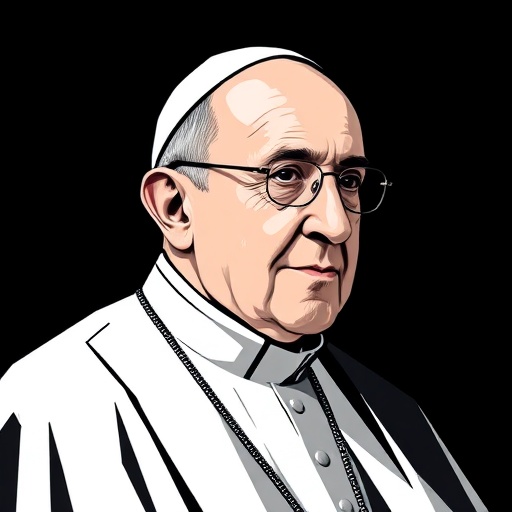
Pope Francis — "I will give everything to the Church. I will not keep anything for myself. I wil…"
I will give everything to the Church. I will not keep anything for myself. I will give everything to the Church. I will not keep anything for myself.
I will give everything to the Church. I will not keep anything for myself. I will give everything to the Church. I will not keep anything for myself.
Click any product to generate a realistic preview. Up to 3 at a time.
* Initial load can take up to 90 seconds — revising the preview in another color is nearly instant.
"Do not be afraid of joy."
"The powerful of the earth, when they do not want to see problems, they cover them up. They hide them."
"We have created new idols. The worship of the ancient golden calf has returned in a new and ruthless guise in the idolatry of money and the dictatorship of an impersonal economy lacking a truly human …"
"A good laugh is good for the soul."
"A person once asked me, in a provocative manner, if I approved of homosexuality. I replied with another question: 'Tell me: when God looks at a gay person, does he endorse the existence of this person…"
First Latin American and Jesuit pope (2013-), who has steered the Catholic Church toward pastoral inclusion on LGBTQ pastoral care, divorced Catholics, and climate. Closely associated with Pope John XXIII (the Vatican II reformer pope) and Cardinal Walter Kasper (his theological ally on pastoral reform). For an intellectual contrast, see Cardinal Raymond Burke, American traditionalist cardinal, former head of the Vatican Apostolic Signatura — Burke is the public face of Catholic traditionalism that views Francis's pastoral approach as doctrinally dangerous — he has formally challenged Amoris Laetitia and other Francis reforms.
Found in 1 providers: grok
1 source checked
This quote expresses total self-sacrifice and unconditional dedication to a cause larger than oneself. The deliberate repetition underscores absolute commitment—nothing withheld, no personal ambition, no private accumulation. Every resource and decision is directed toward the institution and its mission rather than personal enrichment. It is the language of a servant leader who sees himself purely as a steward, accountable to others rather than entitled to anything.
Jorge Mario Bergoglio embodied this pledge long before becoming Pope. As Archbishop of Buenos Aires he rode public buses, cooked his own meals, and refused the official residence. As Pope he chose the humble Casa Santa Marta guesthouse over the Apostolic Palace, washed prisoners' feet on Holy Thursday, and built his papacy around a poor Church for the poor. His Jesuit formation, centered on obedience and poverty, makes this the defining statement of his life.
Francis became Pope in March 2013 following Benedict XVI's unprecedented resignation, amid cascading institutional crises: global clergy sex abuse lawsuits, Vatican Bank money-laundering investigations, and the Vatileaks scandal exposing internal corruption. Church attendance was declining sharply in the West. A Pope publicly pledging total selflessness directly countered pervasive narratives of clerical self-protection and cover-up, signaling a historic break from an era of institutional defensiveness.
AI-generated insights based on extensive research and information for context. Factual errors? Email [email protected].
Your cart is empty