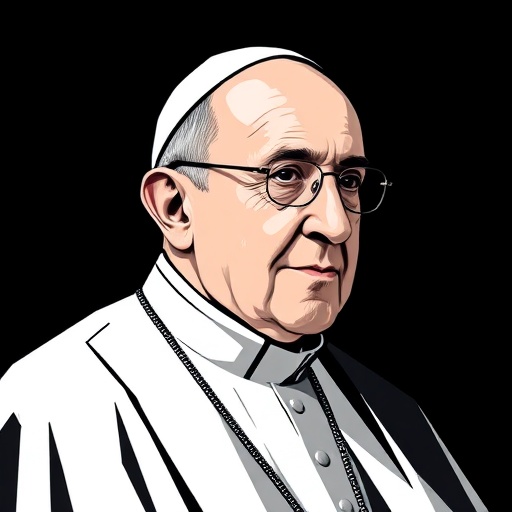
Pope Francis — "The Holy Spirit is a troublemaker."
The Holy Spirit is a troublemaker.
The Holy Spirit is a troublemaker.
Click any product to generate a realistic preview. Up to 3 at a time.
* Initial load can take up to 90 seconds — revising the preview in another color is nearly instant.
"We are all sinners, but we are all loved by God."
"The Church is a field hospital after battle."
"The first reform must be the attitude."
"The world needs mercy, not condemnation."
"The Lord always forgives, always. It is we who get tired of asking for forgiveness."
First Latin American and Jesuit pope (2013-), who has steered the Catholic Church toward pastoral inclusion on LGBTQ pastoral care, divorced Catholics, and climate. Closely associated with Pope John XXIII (the Vatican II reformer pope) and Cardinal Walter Kasper (his theological ally on pastoral reform). For an intellectual contrast, see Cardinal Raymond Burke, American traditionalist cardinal, former head of the Vatican Apostolic Signatura — Burke is the public face of Catholic traditionalism that views Francis's pastoral approach as doctrinally dangerous — he has formally challenged Amoris Laetitia and other Francis reforms.
Found in 1 providers: grok
1 source checked
The Holy Spirit, rather than offering comfort and stability, actively unsettles the status quo. It pushes individuals and institutions past complacency, forcing growth, reform, and unexpected transformation. Rather than a passive presence of peace, the Spirit is cast as an agent of productive disruption — one that challenges people to abandon rigid structures and move toward something genuinely renewed. Troublemaking here is not negative but necessary, even sacred.
Jorge Mario Bergoglio, the first Jesuit pope and first from the Americas, has pursued Catholic reform since 2013 — confronting clergy abuse, critiquing Vatican bureaucracy, and extending pastoral outreach to LGBTQ+ Catholics and the poor. Jesuit formation itself prizes going where others won't and challenging comfortable assumptions. This quote gives theological grounding to his disruptive style, framing his willingness to unsettle Church hierarchies as divinely sanctioned rather than merely personal ambition.
Francis became pope in 2013 amid Catholic crisis: Benedict XVI's unprecedented resignation, global clergy sex-abuse devastation, and Vatican bank scandal. Declining Western attendance coincided with rapid growth in the Global South. Simultaneously, populism and institutional distrust surged worldwide, and fierce debates over LGBTQ+ rights, climate, immigration, and inequality intensified. His framing of the Spirit as troublemaker gave Catholics theological language for embracing disruptive change rather than defending institutional inertia.
AI-generated insights based on extensive research and information for context. Factual errors? Email [email protected].
Your cart is empty