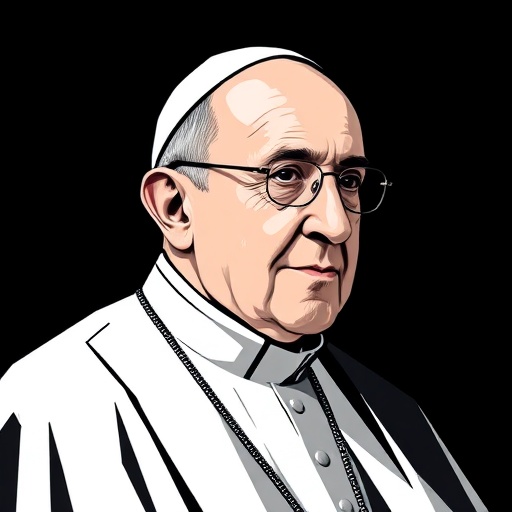
Pope Francis — "Do not be afraid of tenderness."
Do not be afraid of tenderness.
Do not be afraid of tenderness.
Click any product to generate a realistic preview. Up to 3 at a time.
* Initial load can take up to 90 seconds — revising the preview in another color is nearly instant.
"The Church is not a museum of saints, but a hospital for sinners."
"A Christian without joy is not a Christian."
"The only way to fight against hunger is to fight against the poverty that causes it."
"A Christian who is not a revolutionary is not a Christian."
"Better to be an atheist than a hypocritical Christian."
First Latin American and Jesuit pope (2013-), who has steered the Catholic Church toward pastoral inclusion on LGBTQ pastoral care, divorced Catholics, and climate. Closely associated with Pope John XXIII (the Vatican II reformer pope) and Cardinal Walter Kasper (his theological ally on pastoral reform). For an intellectual contrast, see Cardinal Raymond Burke, American traditionalist cardinal, former head of the Vatican Apostolic Signatura — Burke is the public face of Catholic traditionalism that views Francis's pastoral approach as doctrinally dangerous — he has formally challenged Amoris Laetitia and other Francis reforms.
Found in 1 providers: grok
1 source checked
The quote calls on people to embrace compassion, gentleness, and emotional vulnerability without embarrassment or shame. In modern culture, tenderness is often dismissed as weakness—especially in men and leaders. Francis argues it is a form of strength: a willingness to genuinely connect with others' pain and joy. Resist the hardening that cynicism and fear produce; let yourself be moved by what moves other people, and care without reservation.
Jorge Mario Bergoglio grew up in Buenos Aires, worked among Argentina's poor, and chose the name Francis after the saint of radical compassion. As Pope, he has washed prisoners' feet, embraced disfigured worshippers, and prioritized mercy over institutional rigidity. A Jesuit trained in emotional discernment, his papacy consistently models the closeness he preaches—rejecting cold, detached religion for a Church that enters the mess and vulnerability of real human lives.
Francis became Pope in 2013 amid rising global polarization, refugee crises, resurgent nationalism, and the Catholic Church's ongoing reckoning with abuse scandals that had bred institutional coldness. Digital culture was accelerating social fragmentation and a documented loneliness epidemic. His call for tenderness was a deliberate counter-current: against the hardening effects of tribalism, performative toughness in political leaders, and a Church that had grown defensive rather than genuinely pastoral.
AI-generated insights based on extensive research and information for context. Factual errors? Email [email protected].
Your cart is empty