What it means
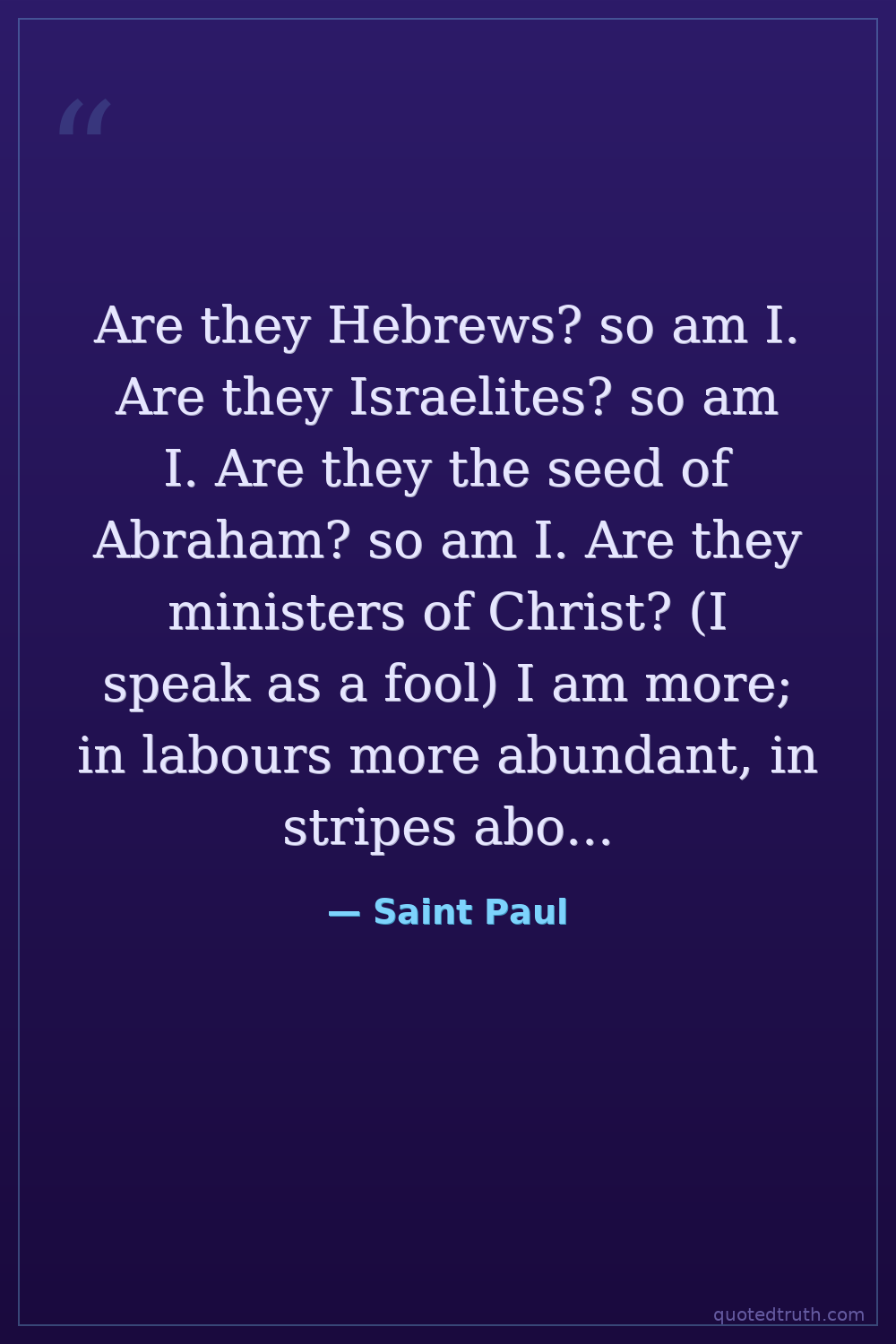
Paul is defending his credentials against rivals who boast about their Jewish heritage and ministry. He matches every claim they make—Hebrew ancestry, Israelite identity, Abrahamic lineage, service to Christ—then goes further by listing his suffering: constant hard work, severe beatings, repeated imprisonments, and brushes with death. He argues that genuine authority comes from endurance and sacrifice, not pedigree or polished speeches, even while acknowledging the boasting itself feels foolish.
Relevance to Saint Paul
This directly mirrors Paul's documented life. Born a Jew in Tarsus and trained under Rabbi Gamaliel, he could legitimately claim Hebrew, Israelite, and Abrahamic credentials. After converting from persecutor to apostle, he endured floggings, shipwrecks, stonings, and multiple jailings across his missionary journeys, eventually executed in Rome. His tentmaking trade kept him financially independent, reinforcing his point that he labored harder than rival preachers who accepted patronage while questioning his legitimacy.
The era
First-century Corinth hosted competing teachers called 'super-apostles' who charged fees, carried letters of recommendation, and judged authority by rhetorical skill and Jewish pedigree—standard markers in Greco-Roman honor culture. Paul wrote this around 55-56 CE while defending his unpaid ministry against these polished rivals. Roman imprisonment, judicial flogging, and synagogue discipline were real occupational hazards for itinerant preachers spreading a movement Rome viewed suspiciously and Jewish authorities considered heretical.
AI-generated insights based on extensive research and information for context. Factual errors? Email [email protected].