Saint Paul — "But I would have you know, that the head of every man is Christ; and the head of…"
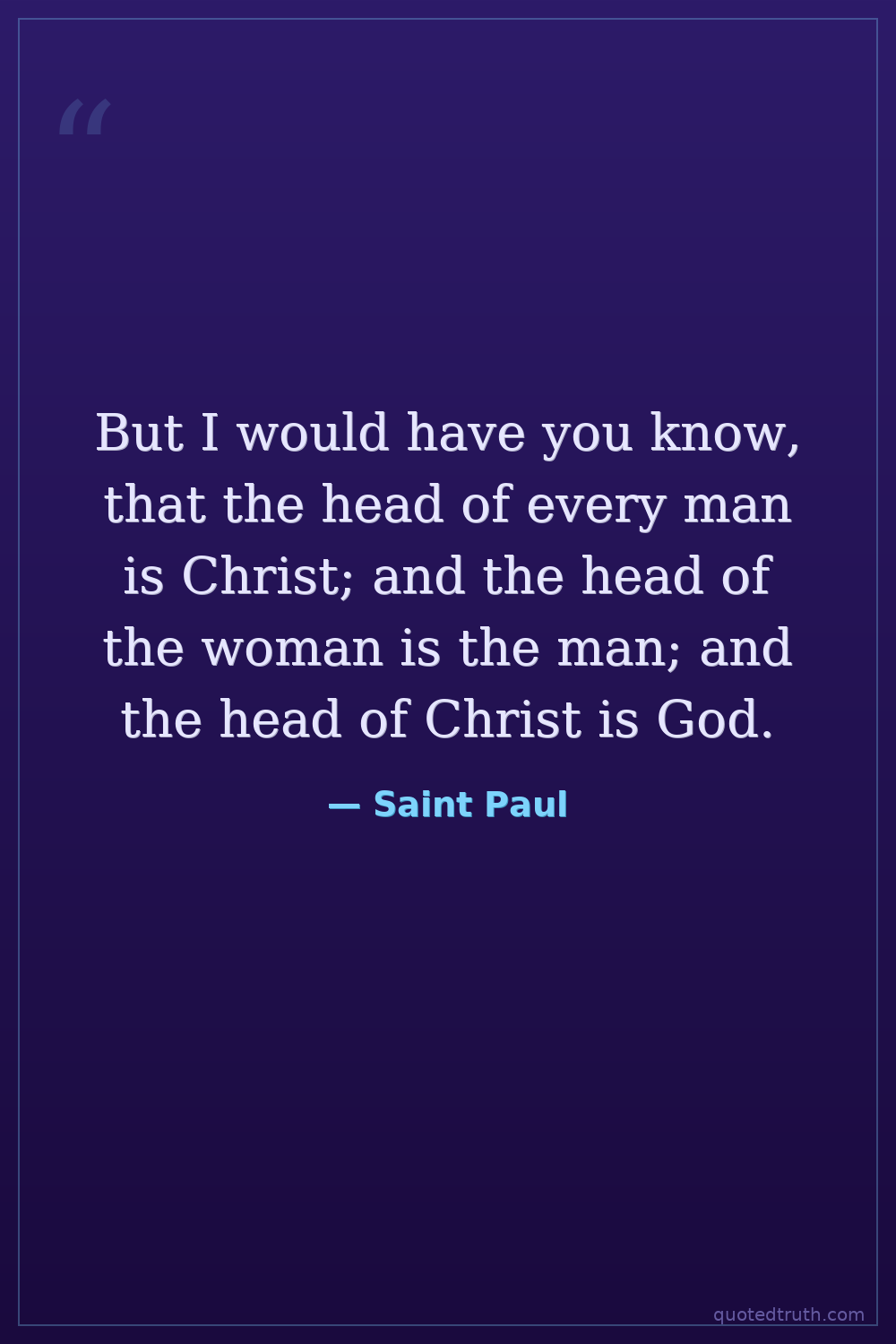
But I would have you know, that the head of every man is Christ; and the head of the woman is the man; and the head of Christ is God.
But I would have you know, that the head of every man is Christ; and the head of the woman is the man; and the head of Christ is God.
Click any product to generate a realistic preview. Up to 3 at a time.
* Initial load can take up to 90 seconds — revising the preview in another color is nearly instant.
"For we wrestle not against flesh and blood, but against principalities, against powers, against the rulers of the darkness of this world, against spiritual wickedness in high places."
"For Adam was first formed, then Eve. And Adam was not deceived, but the woman being deceived was in the transgression."
"For the wages of sin is death; but the gift of God is eternal life through Jesus Christ our Lord."
"And lest I should be exalted above measure through the abundance of the revelations, there was given to me a thorn in the flesh, the messenger of Satan to buffet me, lest I should be exalted above mea…"
"And unto the Jews I became as a Jew, that I might gain the Jews; to them that are under the law, as under the law, that I might gain them that are under the law; To them that are without law, as witho…"
Found in 2 providers: gemini,deepseek
2 sources checked
Paul lays out a chain of authority and responsibility: every man answers to Christ, every woman to her husband, and Christ himself to God the Father. He is not ranking human worth but describing an ordered structure of leadership and accountability within households and the worshiping community, where each link draws its role from the one above it rather than acting independently.
Paul constantly organized young churches scattered across the Roman world, writing letters like 1 Corinthians to settle disputes about worship, marriage, and conduct. A former Pharisee trained under Gamaliel, he prized structured authority and submission to God, and as a tentmaker-apostle he modeled deference to Christ. Framing hierarchy theologically rather than culturally fit his pattern of anchoring practical rules in divine relationships.
First-century Corinth was a wealthy Roman colony with mixed Greek, Jewish, and pagan customs, where head coverings, temple prostitution, and status-driven banquets caused friction inside new house churches. Roman paterfamilias law already assumed male household headship, while mystery cults blurred gender roles in worship. Paul wrote around 54 AD into this swirl, trying to give a fractious congregation a theological framework that could hold together believers from radically different social backgrounds.
AI-generated insights based on extensive research and information for context. Factual errors? Email [email protected].
Your cart is empty