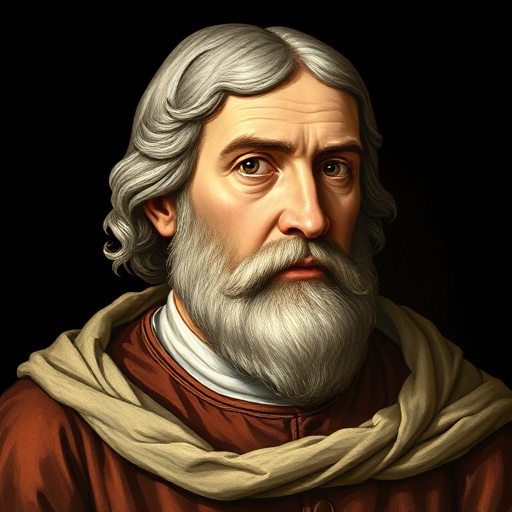
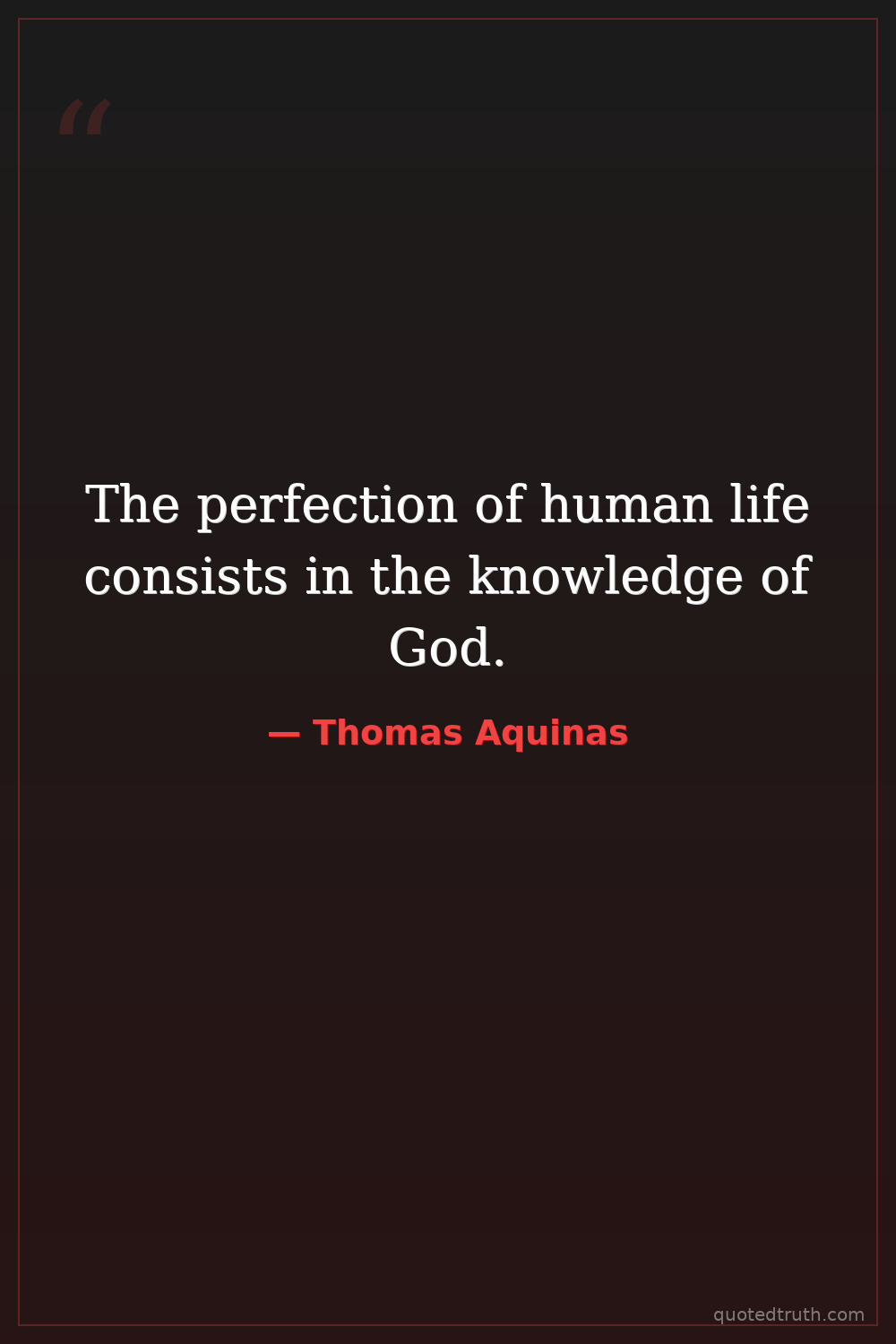
Thomas Aquinas — "The perfection of human life consists in the knowledge of God."
The perfection of human life consists in the knowledge of God.
The perfection of human life consists in the knowledge of God.
Click any product to generate a realistic preview. Up to 3 at a time.
* Initial load can take up to 90 seconds — revising the preview in another color is nearly instant.
"It is lawful to kill a thief who is resisting arrest."
"The intellect is the highest power of the soul."
"Usury is a sin against justice."
"In procreation the man is active, the woman is passive."
"It is lawful to take usury from Jews."
Found in 1 providers: grok
1 source checked
Human life reaches its highest potential—its fullest, most complete form—through knowing God, not through wealth, power, or pleasure. 'Perfection' here means fulfillment, not flawlessness. Human beings are naturally oriented toward God as their ultimate purpose, and understanding the divine is what a truly complete life looks like. Everything else—virtue, reason, happiness—points toward and finds its final meaning in this knowledge.
Aquinas was a Dominican friar who spent his life synthesizing Aristotelian reason with Christian faith. His masterwork, the Summa Theologiae, systematically argues that God is humanity's final end—beatitudo, perfect happiness. As a professor in Paris and Naples, he wrote millions of words in pursuit of divine understanding. Near death, he reportedly said all his writings felt like 'straw' compared to what he had experienced of God—a telling confession that knowing God surpassed even his vast scholarship.
Aquinas lived 1225–1274, during the High Middle Ages, when Aristotle's rediscovered works—transmitted via Arab scholars like Averroes—were destabilizing European universities. Church authorities feared rational philosophy might displace faith. Aquinas's bold project was to reconcile the two: reason and revelation both lead to God. His era also saw the rise of cathedral schools and early universities, where theological knowledge defined education's entire purpose. Knowing God wasn't private devotion—it was the organizing mission of medieval intellectual life.
AI-generated insights based on extensive research and information for context. Factual errors? Email [email protected].
Your cart is empty