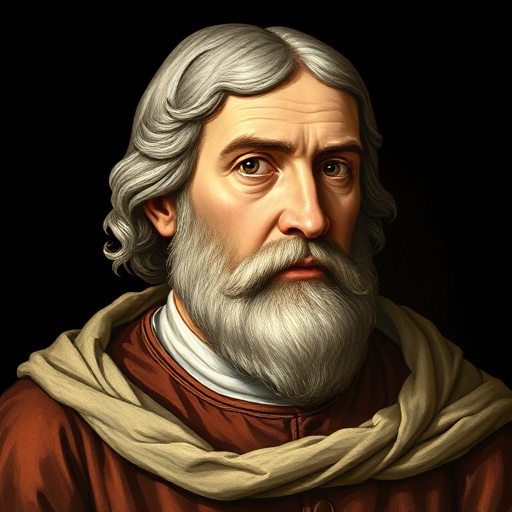
Portrait of Thomas Aquinas

Thomas Aquinas

Catholic philosopher and theologian

Medieval influential 54 sayings

Sayings by Thomas Aquinas

Beware the man of a single book.

Unknown — Attributed saying
Wisdom Unverifiable

Good can exist without evil, whereas evil cannot exist without good.

Approx. 1274 — From 'Summa Theologica', I, q. 49, a. 3
Life & Death Unverifiable

All that I have written seems like straw to me.

1273 — Reported remark after mystical experience
Wisdom Unverifiable

Women are by nature 'deficient and misbegotten.'

c. 1265-1274 — Summa Theologica, Part I, Question 92, Article 1, Reply to Objection 1 (following Aristotle's view o…
General Unverifiable

Strictly speaking, woman is a monster of nature.

c. 1260s — Commentary on Aristotle's On the Generation of Animals, reflecting Aristotle's view of women as 'mas…
General Unverifiable

In procreation the man is active, the woman is passive.

c. 1265-1274 — Summa Theologica, Part I, Question 92, Article 1
General Unverifiable

For a woman is an imperfect man.

c. 1265-1274 — Summa Theologica, Part I, Q. 92, Art. 1, Reply Obj. 1
General Unverifiable

Heretics can not only be excommunicated, but also justly killed.

c. 1265-1274 — Summa Theologica, Part II-II, Q. 11, Art. 3
War & Violence Unverifiable

The root of all evil is avarice.

c. 1265-1274 — Summa Theologica, Part II-II, Q. 118, Art. 1
General Unverifiable

Man is by nature a social animal.

c. 1269-1272 — Commentary on Aristotle's Politics, Book I, Lecture 1
General Unverifiable

The greatest evil is to do wrong and not to suffer for it.

c. 1265-1274 — Often attributed, but exact source in Aquinas is difficult to pinpoint. Reflects his general ethical…
General Unverifiable

The state has the right to coerce its citizens for the common good.

c. 1265-1267 — De Regimine Principum, Book I, Chapter 15
General Unverifiable

It is not lawful for a man to have more than one wife at a time.

c. 1259-1265 — Summa Contra Gentiles, Book III, Chapter 123
General Unverifiable

The natural order of things requires that women be subject to men.

c. 1265-1274 — Summa Theologica, Part I, Q. 92, Art. 1
General Unverifiable

Slavery is a consequence of sin, and thus it is just.

c. 1265-1274 — Summa Theologica, Part II-II, Q. 57, Art. 3, Reply Obj. 2
Social & Racial Unverifiable

The purpose of marriage is the procreation of children.

c. 1265-1274 — Summa Theologica, Part III, Supplement, Q. 49, Art. 1
General Unverifiable

Usury is a sin against justice.

c. 1265-1274 — Summa Theologica, Part II-II, Q. 78, Art. 1
General Unverifiable

It is not lawful to lie in order to save anyone from death.

c. 1265-1274 — Summa Theologica, Part II-II, Q. 110, Art. 3
General Unverifiable

The primary cause of sin is the will.

c. 1265-1274 — Summa Theologica, Part I-II, Q. 75, Art. 1
General Unverifiable

Ignorance is the cause of all evil.

c. 1265-1274 — Often attributed, but a more precise phrasing in Aquinas is that ignorance can be a cause of sin, no…
General Unverifiable
Your Cart

Your cart is empty