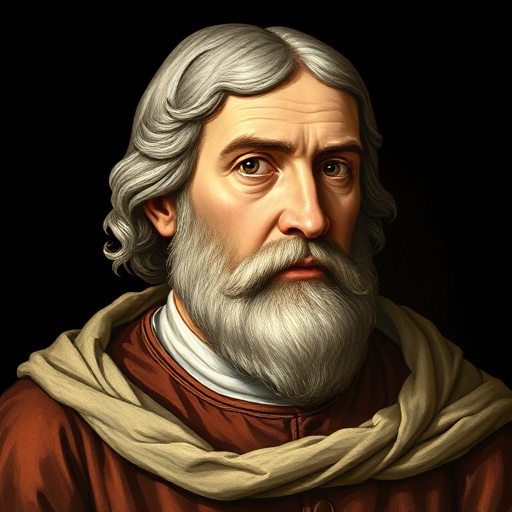
Thomas Aquinas — "It is impossible for any created intellect to comprehend God."
It is impossible for any created intellect to comprehend God.
It is impossible for any created intellect to comprehend God.
Click any product to generate a realistic preview. Up to 3 at a time.
* Initial load can take up to 90 seconds — revising the preview in another color is nearly instant.
"Beware the man of a single book."
"The state has the right to coerce its citizens for the common good."
"The act of generation is more noble than the act of nutrition."
"Man is by nature a social animal."
"It is lawful to kill an enemy in a just war."
Found in 1 providers: grok
1 source checked
No finite mind — human, angelic, or otherwise — can fully grasp God's infinite nature. We may know things about God through reason or revelation, but total comprehension is impossible because God is unlimited while every created intellect is bounded. The gap between Creator and creature cannot be bridged by intellect alone. Knowledge of God is real but always partial, always pointing toward a mystery no created mind can fully contain.
Aquinas spent his life as a Dominican friar and university professor systematically mapping what human reason could know about God. His Summa Theologiae carefully distinguishes what philosophy can demonstrate from what exceeds rational reach. He proved God's existence through five logical arguments yet insisted the divine essence remains beyond full comprehension. This quote embodies his lifelong intellectual humility: rigorous argument in pursuit of God, paired with honest acknowledgment that no created mind — however sharp — grasps God completely.
Aquinas lived during the 13th-century scholastic revolution, when Aristotle's rediscovered texts — filtered through Islamic philosophers like Averroes — arrived at European universities and unsettled Christian orthodoxy. Some church authorities feared philosophy would erode faith. Aquinas argued reason and faith complement each other, but reason has hard limits. Asserting that no created intellect comprehends God defended theological mystery against overconfident rationalists while still championing rigorous philosophical inquiry as a genuine, if incomplete, path toward divine truth.
AI-generated insights based on extensive research and information for context. Factual errors? Email [email protected].
Your cart is empty