What it means
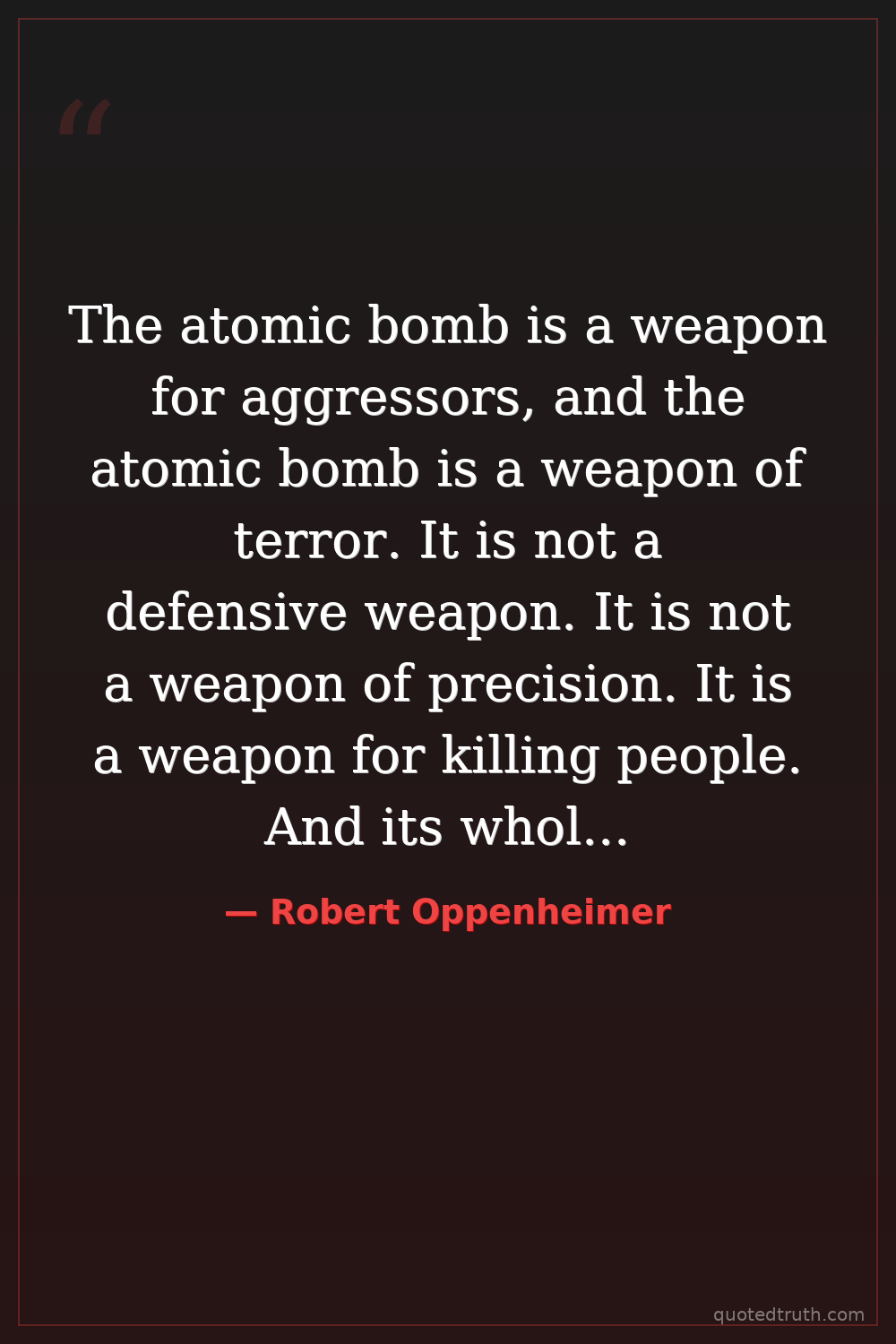
Nuclear weapons cannot be used selectively or defensively—they obliterate entire populations indiscriminately. Unlike conventional arms that can target combatants, atomic bombs kill civilians and soldiers alike across vast areas. Their only real function is to terrorize and destroy on a massive scale, making them tools of aggression rather than protection. Anyone who deploys them is not defending a population but annihilating one, which is a fundamentally different moral category than conventional warfare.
Relevance to Robert Oppenheimer
Oppenheimer directed the Manhattan Project, personally overseeing the creation of the bombs dropped on Hiroshima and Nagasaki, killing over 100,000 civilians in days. That direct responsibility haunted him deeply—he famously quoted the Bhagavad Gita after Trinity: 'Now I am become Death.' He later opposed the hydrogen bomb, advocated for international arms control, and had his security clearance revoked in 1954 partly because his moral opposition to nuclear escalation was deemed a security risk.
The era
Oppenheimer spoke during the early Cold War nuclear arms race, when the US and USSR were rapidly expanding arsenals while governments promoted the doctrine of deterrence—the idea that mutual assured destruction prevented war. Hiroshima and Nagasaki were fresh realities, not abstractions. McCarthyism silenced dissenting scientists. Oppenheimer's framing directly challenged official US policy, which presented nuclear weapons as stabilizing tools, positioning him as a dissident voice against the prevailing political and military consensus of the 1950s.
AI-generated insights based on extensive research and information for context. Factual errors? Email [email protected].