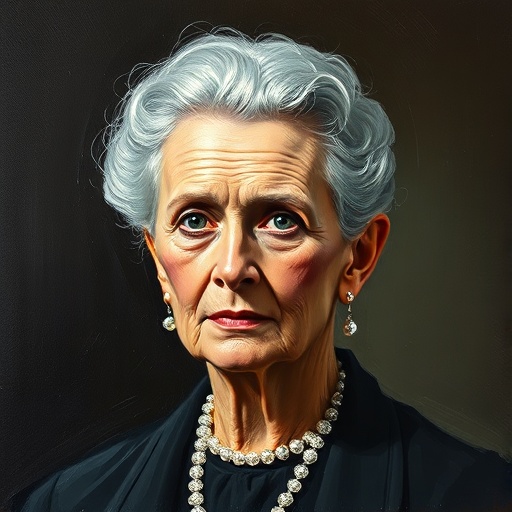
Marie Curie — "First principle: never to let one's self be beaten down by persons or by events."
First principle: never to let one's self be beaten down by persons or by events.
First principle: never to let one's self be beaten down by persons or by events.
Click any product to generate a realistic preview. Up to 3 at a time.
* Initial load can take up to 90 seconds — revising the preview in another color is nearly instant.
"I am a Polish woman, and I am proud of it."
"Life is not easy for any of us. But what of that? We must have perseverance and above all confidence in ourselves."
"We must believe in the human spirit, which is a powerful weapon."
"The way of progress was neither swift nor easy."
"I am not afraid of anything. I am only afraid of not being able to do my work. I am only afraid of not being able to discover new things."
A strong personal motto, almost comically determined.
Date: Early 20th century (approximate)
Food & DrinkFound in 1 providers: gemini
1 source checked
Make a personal rule of never allowing other people or life's setbacks to crush your spirit or stop your progress. Hostile critics, failures, losses, and unexpected disasters will come, but you decide whether they defeat you. Persistence is treated as a foundational commitment rather than a reaction. You stay standing, keep working, and refuse to surrender your direction regardless of pressure, discouragement, or circumstance.
Curie lived this rule. She faced poverty as a Polish student in Paris, sexist exclusion from the French Academy of Sciences, a xenophobic press campaign after her affair with Paul Langevin, and the sudden death of her husband Pierre in 1906. She kept researching radium, took over his professorship at the Sorbonne as its first female professor, and won a second Nobel Prize in 1911 despite the scandal.
Late 19th and early 20th century Europe largely barred women from universities, laboratories, and scientific honors. Curie worked through World War I, personally driving mobile X-ray units to front-line field hospitals. Nationalism, antisemitism, and suspicion of foreigners shaped public opinion, and tabloid journalism could destroy reputations overnight. Her refusal to be beaten down mattered in a world actively trying to push women and outsiders out of serious science.
AI-generated insights based on extensive research and information for context. Factual errors? Email [email protected].
Your cart is empty