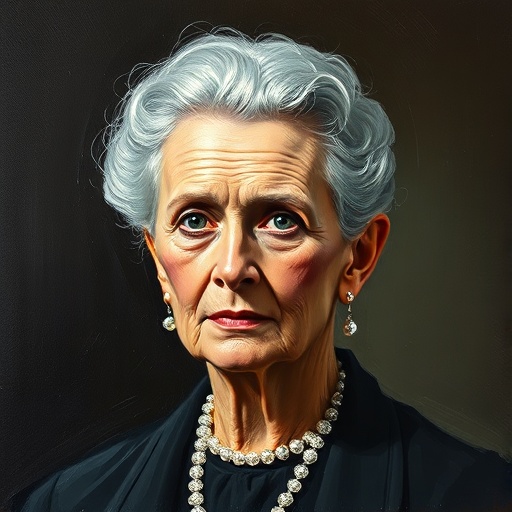
Marie Curie — "Life is not easy for any of us. But what of that? We must have perseverance and …"
Life is not easy for any of us. But what of that? We must have perseverance and above all confidence in ourselves.
Life is not easy for any of us. But what of that? We must have perseverance and above all confidence in ourselves.
Click any product to generate a realistic preview. Up to 3 at a time.
* Initial load can take up to 90 seconds — revising the preview in another color is nearly instant.
"I am among those who think that science has great beauty. A scientist in his laboratory is not merely a technician: he is also a child confronting natural phenomena that impress him as though they wer…"
"I had to work for my living, and I had to study. It was a very hard time for me."
"You cannot hope to build a better world without improving the individuals."
"All my life through, the new sights of Nature made me rejoice like a child."
"Life is not easy for any of us. But what of that? We must have perseverance and above all confidence in ourselves. We must believe that we are gifted for something and that this thing must be attained…"
Found in 1 providers: deepseek
1 source checked
Everyone faces hardship, so struggle is not a reason to quit. Instead of dwelling on unfairness or wishing life were smoother, you push through with steady effort and trust in your own abilities. Self-belief is the decisive factor because external conditions will rarely cooperate. The quote reframes difficulty as a universal baseline, then places responsibility for progress squarely on the individual's determination and inner conviction.
Curie lived this creed. A poor Polish woman barred from Warsaw universities, she scrubbed through Paris on near-starvation rations, then spent four years stirring tons of pitchblende in a leaky shed to isolate radium. Widowed suddenly in 1906, denied French Academy membership for being female, and smeared by the press over a later affair, she kept working and won a second Nobel. Perseverance and self-confidence were not slogans for her; they were survival tools.
Curie worked from the 1890s through the 1930s, when women were excluded from most European universities, laboratories, and learned societies. Science was transforming—X-rays, the electron, and radioactivity overturned classical physics—yet female researchers were unpaid, unpublished, or credited to husbands. Two world wars bracketed her career, and nationalism often trumped merit. In that climate, a Polish-born woman insisting on her own capability and pressing forward without institutional backing was genuinely radical.
AI-generated insights based on extensive research and information for context. Factual errors? Email [email protected].
Your cart is empty