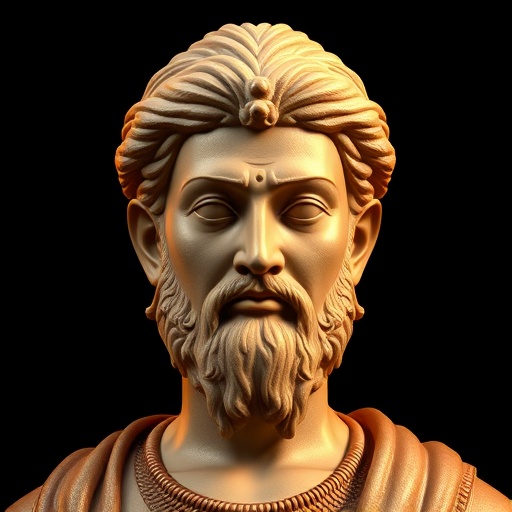
Mahavira — "The soul is the only reality; the rest is illusion."
The soul is the only reality; the rest is illusion.
The soul is the only reality; the rest is illusion.
Click any product to generate a realistic preview. Up to 3 at a time.
* Initial load can take up to 90 seconds — revising the preview in another color is nearly instant.
"Live and allow others to live; hurt no one; life is dear to all living beings."
"All breathing, existing, living, sentient creatures should not be slain, nor treated with violence, nor abused, nor tormented, nor driven away."
"A man should wander about treating all creatures as he himself would be treated."
"Respect for all living beings is Jainism."
"Every living being, great or small, possesses a soul."
24th and last Tirthankara of Jainism, whose teachings of strict ahimsa (non-violence), aparigraha (non-attachment), and karma reshaped ancient Indian religion. Closely associated with The Buddha (near-contemporary moral revolutionary, also reacting against Vedic ritualism). For an intellectual contrast, see Vedic Brahmanical ritual sacrifice, the animal-sacrifice-centered Vedic religion of his era — Mahavira's ahimsa demanded total non-violence, including not eating root vegetables that kill the plant — a maximum-distance ethical move from the Vedic priestly tradition that ritually sacrificed cattle and horses. The two cleanest poles of ancient Indian religious ethics.
Found in 1 providers: deepseek
1 source checked
The inner self — consciousness, awareness, the experiencing subject — is what truly exists. Everything material: wealth, status, physical pleasures, even the body itself, is temporary and ultimately unreal. What matters is the cultivation and liberation of the soul, not attachment to the world of objects and appearances, which constantly shifts and eventually vanishes.
Mahavira abandoned royal inheritance at 30, endured 12 years of extreme asceticism, and achieved enlightenment through radical detachment. His entire life demonstrated soul-primacy over matter. Jainism's central project — ahimsa, non-attachment, moksha — flows directly from this conviction that liberated consciousness is the only genuine achievement a being can pursue.
6th-century BCE India was philosophically explosive: the Upanishads questioned Vedic ritual, Buddhism emerged, and materialism via Charvaka challenged spiritualism. Against this debate, Mahavira's assertion directly opposed both ritualistic Brahminism and materialist hedonism, offering a third path where individual soul-purification — not priestly sacrifice or sensory indulgence — determined liberation and cosmic standing.
AI-generated insights based on extensive research and information for context. Factual errors? Email [email protected].
Your cart is empty