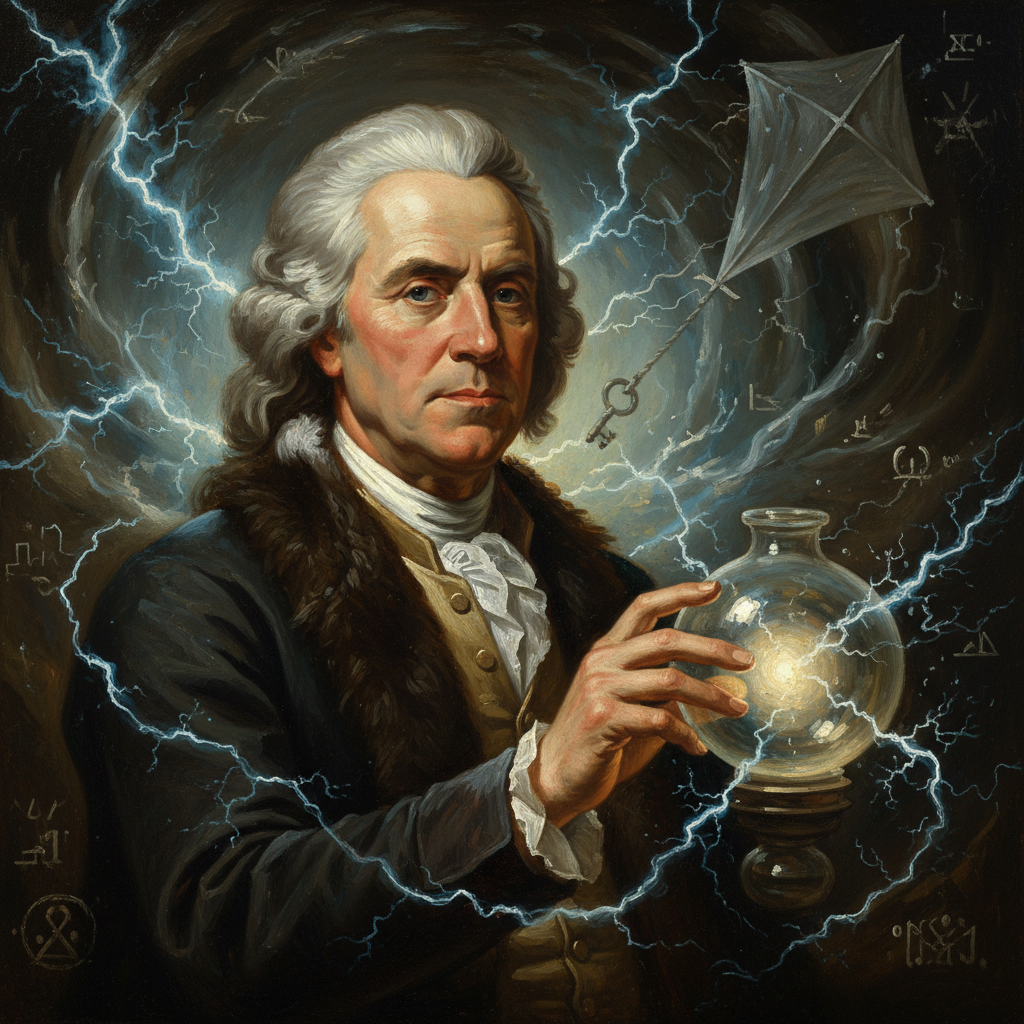
Benjamin Franklin — "Experience keeps a dear school, but fools will learn in no other."
Experience keeps a dear school, but fools will learn in no other.
Experience keeps a dear school, but fools will learn in no other.
Click any product to generate a realistic preview. Up to 3 at a time.
* Initial load can take up to 90 seconds — revising the preview in another color is nearly instant.
"A man without a wife is but half a man."
"A penny saved is a penny got."
"He that pursues two hares at once, commonly catches neither."
"If you're going through hell, keep going."
"A man wrapped up in himself makes a very small bundle."
Polymath Founding Father, diplomat, and Poor Richard's Almanack author who helped draft the Declaration of Independence and the Constitution. Closely associated with John Adams (fellow Founder, Massachusetts statesman) and Thomas Jefferson (fellow Declaration drafter). For an intellectual contrast, see Thomas Hutchinson, last royal governor of colonial Massachusetts — Franklin leaked Hutchinson's loyalist correspondence to Boston in 1772 to inflame revolutionary sentiment — Hutchinson represented the colonial-aristocrat crown-loyalty that Franklin's revolution was organized to dismantle.
Found in 1 providers: grok
1 source checked
Learning from personal mistakes is expensive — in time, money, and pain. While hands-on experience does teach, it costs far more than absorbing lessons from advice, books, or others' examples. Only foolish people refuse to learn any other way, insisting on discovering every hard truth themselves. Smart people leverage accumulated wisdom; fools pay full price for lessons that were freely available all along.
Franklin was largely self-educated yet read voraciously and founded America's first public lending library, believing in learning efficiently. He wrote Poor Richard's Almanack for 26 years, distilling practical wisdom so readers could sidestep costly mistakes. His electrical experiments built methodically on prior findings rather than blind trial-and-error. He embodied the conviction that a wise person leverages accumulated knowledge rather than reinventing every lesson through avoidable personal failure.
In 18th-century colonial America, formal schooling was scarce and literacy uneven. The Enlightenment championed reason and printed knowledge as alternatives to superstition and blind tradition. Franklin's era saw newspapers, almanacs, and lending libraries emerge as cheap vehicles for transmitting hard-won experience. Yet apprenticeship — learning by doing under a master — remained the dominant educational model, making the tension between book-learning and costly self-taught experience a live, culturally urgent debate.
AI-generated insights based on extensive research and information for context. Factual errors? Email [email protected].
Your cart is empty