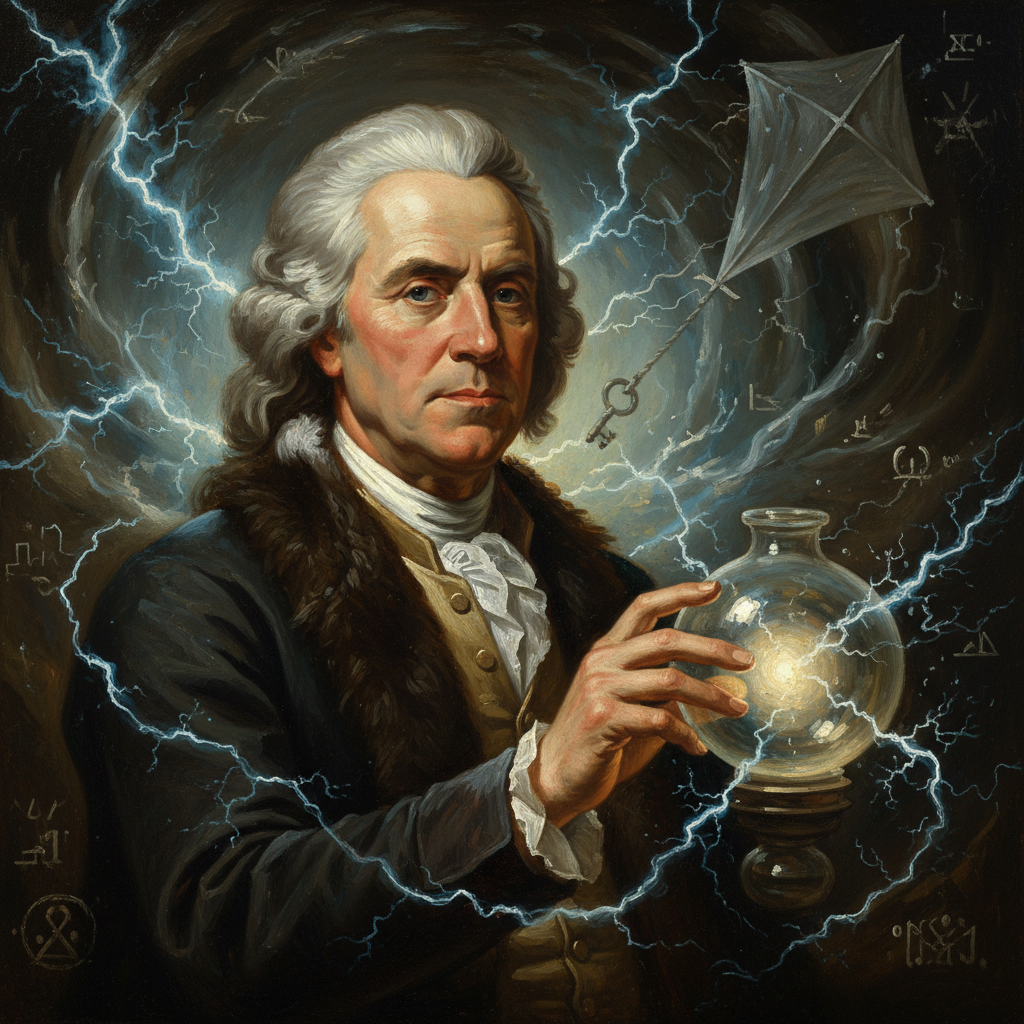
Benjamin Franklin — "A penny saved is a penny got."
A penny saved is a penny got.
A penny saved is a penny got.
Click any product to generate a realistic preview. Up to 3 at a time.
* Initial load can take up to 90 seconds — revising the preview in another color is nearly instant.
"Guests, like fish, begin to smell after three days."
"Three things are men most apt to be cheated in, a horse, a wig, and a wife."
"Rather go to bed supperless, than rise in debt."
"Eat to please yourself, but dress to please others."
"It is universally well known, That in digesting our common Food, there is created or produced in the Bowels of human Creatures, a great Quantity of Wind. That the permitting this Air to escape and mix…"
Polymath Founding Father, diplomat, and Poor Richard's Almanack author who helped draft the Declaration of Independence and the Constitution. Closely associated with John Adams (fellow Founder, Massachusetts statesman) and Thomas Jefferson (fellow Declaration drafter). For an intellectual contrast, see Thomas Hutchinson, last royal governor of colonial Massachusetts — Franklin leaked Hutchinson's loyalist correspondence to Boston in 1772 to inflame revolutionary sentiment — Hutchinson represented the colonial-aristocrat crown-loyalty that Franklin's revolution was organized to dismantle.
Found in 1 providers: grok
1 source checked
Every penny you avoid spending stays in your pocket — equivalent to earning a new one. Frugality and income are economically identical outcomes: holding onto existing money requires the same discipline as generating new money. Restraint is reframed as a productive act, not mere denial. In modern terms: cutting your expenses by a dollar improves your financial position exactly as much as earning an extra dollar does.
Franklin published this maxim in Poor Richard's Almanack, the annual pamphlet he produced 1732–1758 that reached tens of thousands of colonial households. He practiced what he preached: born the 15th of 17 children in a modest Boston family, he built wealth through printing, disciplined saving, and reinvestment. His autobiography lists frugality as one of his 13 virtues. His rise from runaway apprentice to wealthy printer and diplomat proved the maxim's validity firsthand.
Colonial America ran on chronic coin shortages. Britain actively suppressed colonial currency issuance to maintain trade dominance, leaving silver and gold scarce. Most transactions relied on barter or credit. Against this backdrop, every retained penny carried outsized practical weight — lost money was nearly impossible to replace through wages, which were low and irregular. Thrift was not a middle-class virtue but the primary financial strategy available to ordinary colonists trying to stay solvent.
AI-generated insights based on extensive research and information for context. Factual errors? Email [email protected].
Your cart is empty