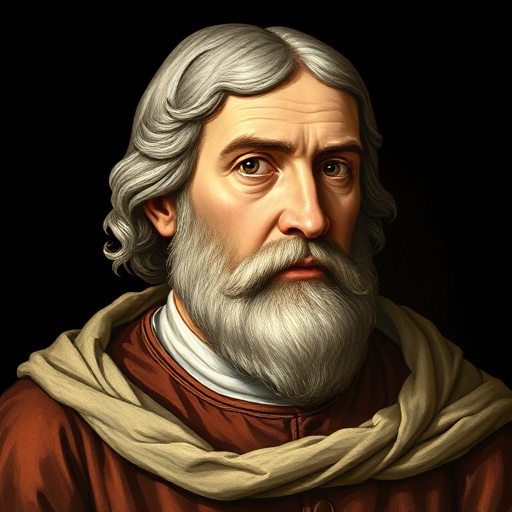
Thomas Aquinas — "Good can exist without evil, whereas evil cannot exist without good."
Good can exist without evil, whereas evil cannot exist without good.
Good can exist without evil, whereas evil cannot exist without good.
Click any product to generate a realistic preview. Up to 3 at a time.
* Initial load can take up to 90 seconds — revising the preview in another color is nearly instant.
"Ignorance is the cause of all evil."
"The intellect is perfected by truth, and the will by good."
"It is not lawful to lie in order to save anyone from death."
"The virtue of chastity is a part of temperance."
"A slave is an instrument of his master, and is his property."
Found in 1 providers: deepseek
1 source checked
Good stands on its own — it needs nothing else to exist. Evil, by contrast, is not an independent force but a corruption or deficiency within something good. It can only exist as a parasite on goodness; a thing utterly stripped of all goodness simply ceases to be. This makes evil fundamentally derivative, never primary. No matter how dark things get, good always comes first and remains the foundation.
Aquinas built his Summa Theologica around defending God's absolute goodness, inheriting Augustine's privatio boni doctrine — evil as privation of good, not a rival substance. As a Dominican friar actively countering the Cathar heresy, which preached equal cosmic forces of good and evil, this wasn't abstract: it was central to his mission. His Aristotelian precision gave the Church its sharpest philosophical weapon against dualism, cementing his legacy as theology's greatest systematizer.
In 13th-century Europe, the Cathar movement spread through France and Italy teaching that evil was an independent divine power equal to God — two cosmic forces eternally opposed. The Church declared crusade against them. Meanwhile, rediscovered Aristotelian texts arriving via Arab scholars were transforming European intellectual life and sparking fierce debates about the nature of being. Aquinas wrote at this crossroads, using Aristotle's framework to show evil had no independent existence, dismantling dualism philosophically.
AI-generated insights based on extensive research and information for context. Factual errors? Email [email protected].
Your cart is empty