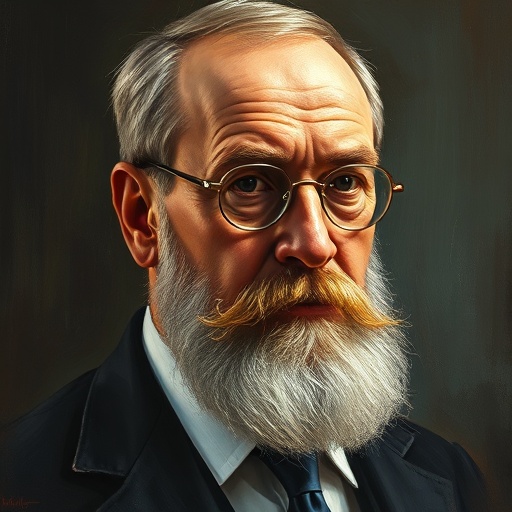
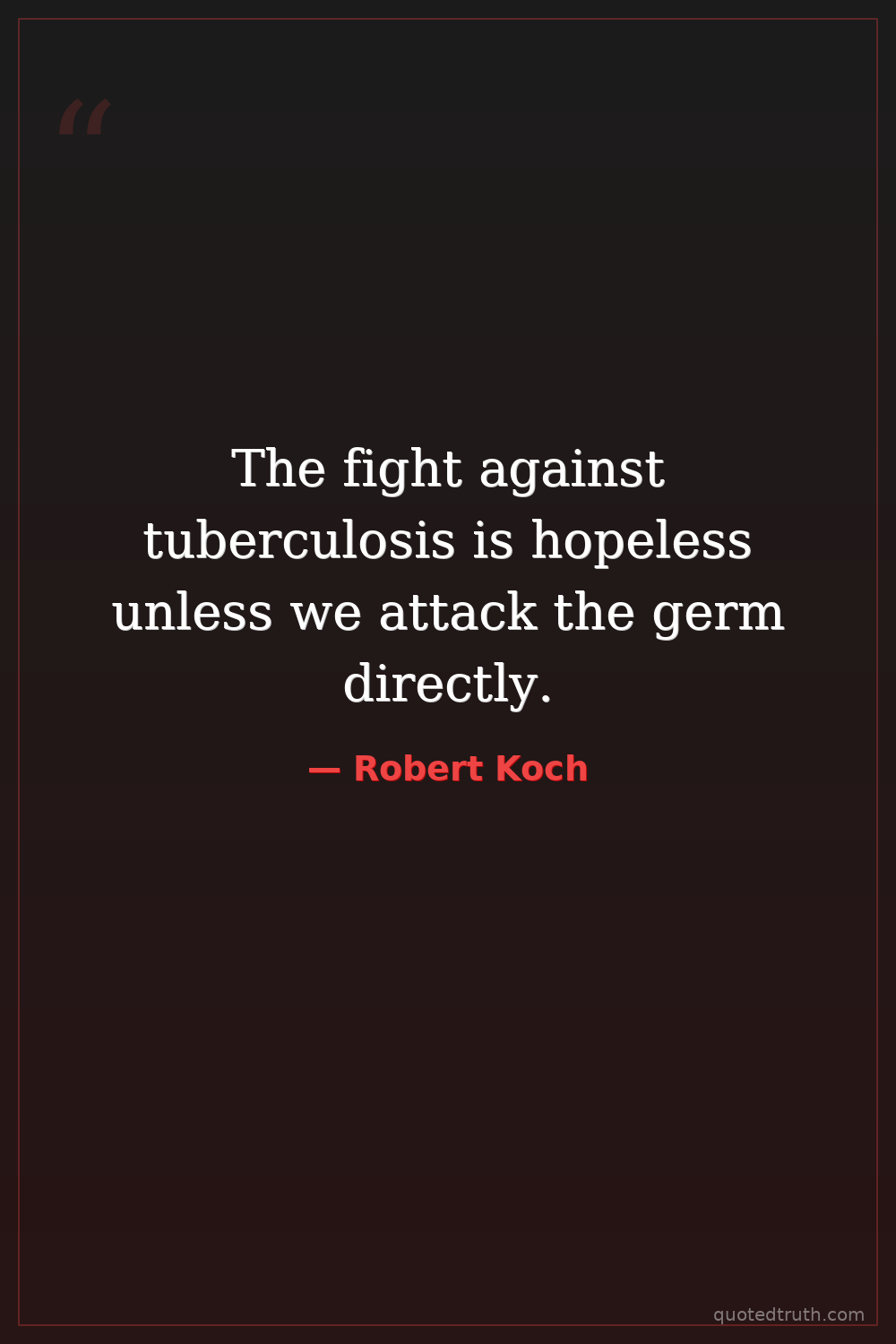
Robert Koch — "The fight against tuberculosis is hopeless unless we attack the germ directly."
The fight against tuberculosis is hopeless unless we attack the germ directly.
The fight against tuberculosis is hopeless unless we attack the germ directly.
Click any product to generate a realistic preview. Up to 3 at a time.
* Initial load can take up to 90 seconds — revising the preview in another color is nearly instant.
"To conquer disease, we must first understand its nature."
"The microbes are always there; it is the soil that changes."
"The greatest obstacle to progress is not ignorance, but the illusion of knowledge."
"The existence of microorganisms as a cause of disease is no longer a matter of theory, but a demonstrated fact."
"The search for remedies against infectious diseases requires tireless effort."
Found in 1 providers: deepseek
1 source checked
Defeating a disease requires targeting its actual biological cause — the pathogen — not merely managing symptoms or improving general health conditions. Treating tuberculosis through rest cures, fresh air, or sanatoriums might ease suffering but won't eliminate the disease. True victory demands identifying and destroying the specific germ responsible. This is a precision-first philosophy: understand the enemy exactly, then fight it at its source rather than addressing downstream effects.
In 1882, Koch identified Mycobacterium tuberculosis as TB's cause, earning him the 1905 Nobel Prize. His career was built on proving specific microbes cause specific diseases — codified as Koch's Postulates. He rejected vague environmental explanations for illness. This quote embodies his conviction that scientific precision, not social reform or guesswork, was the only path to conquering infectious disease. Fighting the germ directly was literally his life's defining work.
In the late 19th century, tuberculosis killed roughly one in seven people across Europe and North America — known as the white plague. Most physicians still operated under miasma theory or vague constitutional explanations. Sanatorium movements promoted fresh air and rest as primary treatments. Koch's bacteriological revolution reframed disease as a battle against identifiable organisms, shifting medicine toward targeted interventions and laying the foundation for modern antibiotics and vaccines.
AI-generated insights based on extensive research and information for context. Factual errors? Email [email protected].
Your cart is empty