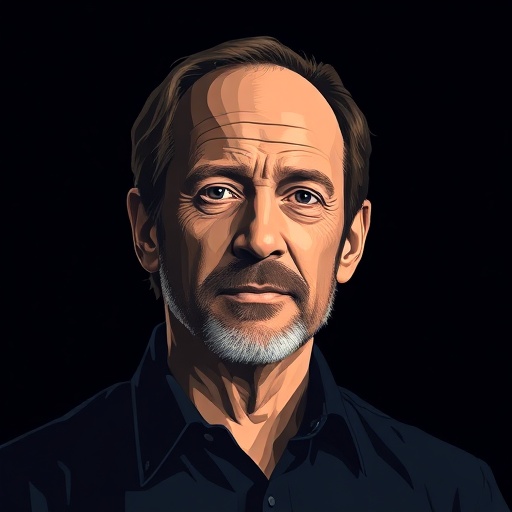
Tim Berners-Lee — "I was devastated when I saw how the web was being misused."
I was devastated when I saw how the web was being misused.
I was devastated when I saw how the web was being misused.
Click any product to generate a realistic preview. Up to 3 at a time.
* Initial load can take up to 90 seconds — revising the preview in another color is nearly instant.
"I actually thought for a while that the internet would just be for physicists. Then I realized it could be for everybody."
"The original idea of the web was that it should be a collaborative space where you can communicate and collaborate. That's not what happened. It became a read-only medium, and then it became a read-wr…"
"The web was designed to connect people, not to manipulate them."
"I didn’t invent the web for people to waste time on it."
"The web is not about technology, it's about people."
British computer scientist who invented the World Wide Web at CERN in 1989 and founded the W3C, championing open web standards. Closely associated with Vint Cerf (TCP/IP co-creator and 'father of the internet') and Marc Andreessen (Mosaic browser creator and Netscape co-founder). For an intellectual contrast, see Mark Zuckerberg, Facebook (Meta) founder — Zuckerberg's walled-garden Facebook is the canonical contemporary opposite of Berners-Lee's open-web vision; Berners-Lee's Solid project and 'recapture the web' essays are explicitly written as a rebuttal to the platform-monopoly model Facebook pioneered.
Found in 1 providers: deepseek
1 source checked
The speaker feels deep grief and disappointment watching something they created get twisted away from its intended purpose. What was meant to empower, connect, and inform people has instead become a vehicle for manipulation, surveillance, misinformation, and exploitation. The emotional weight of the word 'devastated' signals not mild regret but a profound personal wound, the kind that comes from seeing a gift to humanity weaponized against the very people it was meant to serve.
Berners-Lee invented the World Wide Web in 1989 at CERN and gave it away royalty-free, envisioning an open platform for shared knowledge. He has since publicly lamented its capture by surveillance capitalism, disinformation, and platform monopolies. He launched the Solid project and the Contract for the Web to restore user control over data, and his Web Foundation campaigns against online harms — making this quote a direct expression of his decades-long fight to reclaim his creation.
By the 2010s and 2020s, the web Berners-Lee birthed had been reshaped by Cambridge Analytica scandals, election interference, algorithmic radicalization, ad-tech tracking, and the dominance of a handful of tech giants. Revelations about mass surveillance, deepfakes, harassment campaigns, and child exploitation darkened public discourse about the internet. Calls for regulation, decentralization, and digital rights intensified globally, framing his despair within a wider cultural reckoning over Big Tech's harms.
AI-generated insights based on extensive research and information for context. Factual errors? Email [email protected].
Your cart is empty