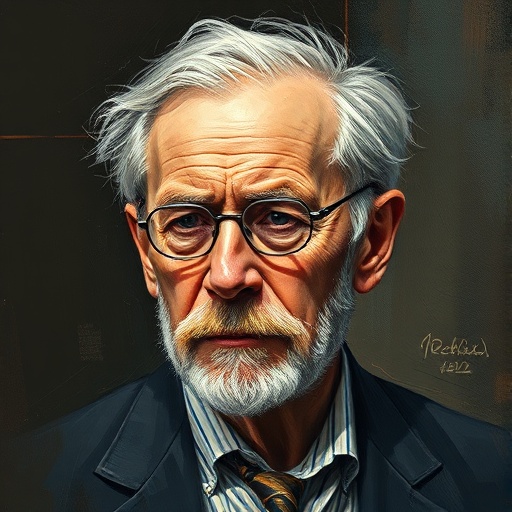
Erwin Schrodinger — "The world is a dream, and we are the dreamers."
The world is a dream, and we are the dreamers.
The world is a dream, and we are the dreamers.
Click any product to generate a realistic preview. Up to 3 at a time.
* Initial load can take up to 90 seconds — revising the preview in another color is nearly instant.
"The human mind is a mirror, reflecting the universe."
"The world is full of magic, and we are here to experience it."
"The world is much stranger than we can imagine."
"I am a physicist, not a philosopher. But I cannot help but think about these things."
"If you cannot explain it simply, you do not understand it well enough."
Austrian physicist who shared the 1933 Nobel for the wave equation that bears his name and the famous cat thought-experiment. Closely associated with Werner Heisenberg (matrix-mechanics rival who reached the same physics by different math) and Albert Einstein (his pen-pal on quantum interpretation). For an intellectual contrast, see Niels Bohr, Danish physicist and architect of the Copenhagen interpretation — Schrödinger's cat thought-experiment was specifically designed to ridicule Bohr's 'observer-dependent reality' reading of quantum mechanics — Schrödinger thought the Copenhagen interpretation was absurd; the cat was meant as reductio ad absurdum.
Found in 1 providers: grok
1 source checked
Reality as we perceive it may not be a fixed, objective truth but rather a constructed experience shaped by our minds. What we call the physical world could be more like a shared mental projection than a solid, independent thing—suggesting consciousness plays a deeper role in existence than common sense admits.
Schrödinger spent his career mathematically describing quantum wave functions—probability clouds rather than definite particles. His famous cat paradox exposed how observation collapses quantum superposition into reality. He wrote 'What is Life?' exploring consciousness, and drew heavily from Vedantic philosophy, genuinely believing mind and world were inseparable.
In the early-to-mid 20th century, quantum mechanics shattered classical determinism. Einstein, Bohr, and Schrödinger debated whether physics described reality or merely our measurements of it. Simultaneously, Eastern philosophy entered Western intellectual circles. The Copenhagen interpretation made observer-dependent reality mainstream in physics, making this sentiment scientifically charged rather than merely poetic.
AI-generated insights based on extensive research and information for context. Factual errors? Email [email protected].
Your cart is empty