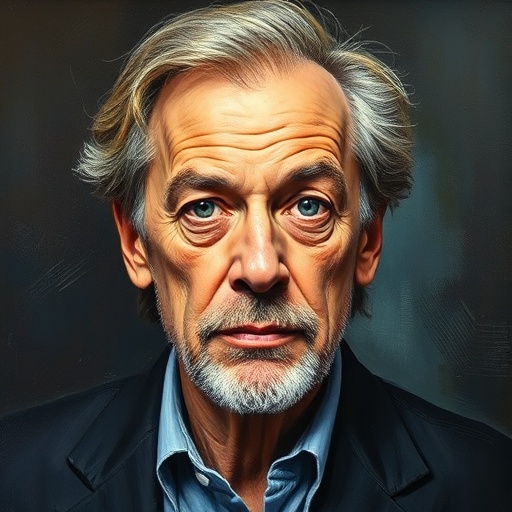
Richard Feynman — "What I cannot create, I do not understand."
What I cannot create, I do not understand.
What I cannot create, I do not understand.
Click any product to generate a realistic preview. Up to 3 at a time.
* Initial load can take up to 90 seconds — revising the preview in another color is nearly instant.
"I guess I'm just mischievous. I just love to do that to people. Well especially when they're so gleefully happy that it's been going to cost 13 signatures haha."
"To every man is given the key to the gates of heaven; the same key opens the gates of hell."
"There are no rules in science, only facts."
"I don't think there's any such thing as a 'best' way to do anything. There's just what works."
"The thing about science is that it's all about trying to prove yourself wrong."
American theoretical physicist who shared the 1965 Nobel for QED, developed Feynman diagrams, and wrote the Feynman Lectures on Physics. Closely associated with Julian Schwinger (co-Nobelist for QED) and Murray Gell-Mann (Caltech rival and Eightfold-Way physicist). For an intellectual contrast, see Deepak Chopra, physician and quantum-mysticism author — Feynman's Caltech 'cargo cult science' commencement address is the precise template for what he saw as misuse of physics terminology — Chopra-style appropriation of quantum vocabulary for metaphysical claims is the canonical example of what Feynman called 'fooling yourself'.
Often attributed, appears in various forms, relating to his approach to learning and understanding.
Date: Unknown
Art & CreativityFound in 1 providers: grok
1 source checked
True understanding means being able to build something from scratch. If you can only describe or recall something but cannot reconstruct it from first principles, your grasp is shallow or borrowed. Real knowledge is generative — you understand something deeply when you can reproduce it independently. This is a test of comprehension: can you derive it yourself, or are you merely repeating what you have memorized?
Feynman rederived vast stretches of physics from first principles rather than inheriting existing frameworks — his path integral formulation of quantum mechanics was built, not borrowed. He invented Feynman diagrams as a creative tool to make QED calculable. This sentence was reportedly found on his Caltech blackboard at his death in 1988. His signature teaching method demanded students reconstruct ideas themselves, not merely recognize them.
Feynman's career spanned the Cold War era, when physics grew simultaneously more powerful and more abstract. Post-Manhattan Project, theorists wielded enormous influence but risked drifting into formalism disconnected from physical intuition. QED emerged in the late 1940s as competing mathematical frameworks collided. Feynman's insistence on construction over memorization was a deliberate counterweight to rote academic culture and an increasingly credential-driven scientific establishment.
AI-generated insights based on extensive research and information for context. Factual errors? Email [email protected].
Your cart is empty