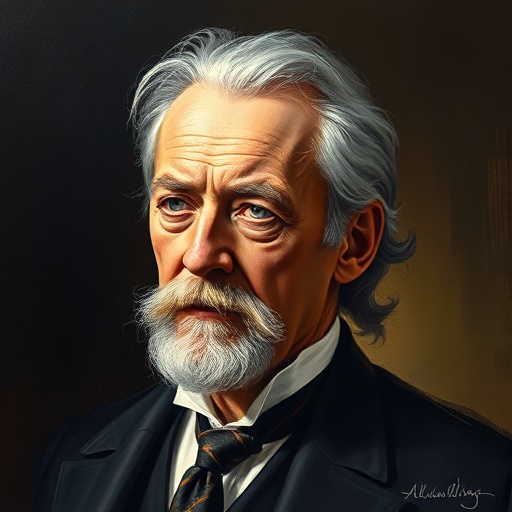
Alexander Fleming — "The public will probably never understand the difficulties that beset the path o…"
The public will probably never understand the difficulties that beset the path of the original investigator.
The public will probably never understand the difficulties that beset the path of the original investigator.
Click any product to generate a realistic preview. Up to 3 at a time.
* Initial load can take up to 90 seconds — revising the preview in another color is nearly instant.
"The therapeutic value of penicillin is enormous, but its indiscriminate use could lead to disaster."
"If penicillin can cure those that are ill, Spanish sherry can bring the dead back to life."
"I am not a hero. I just happened to be in the right place at the right time."
"The thoughtless person playing with penicillin treatment is morally responsible for the death of the man who succumbs to infection with the penicillin-resistant organism."
"It is not wise to be too dogmatic in science. One must always be prepared to change one's mind."
Found in 1 providers: grok
1 source checked
Scientific breakthroughs look effortless from the outside, but the reality is years of failed experiments, dead ends, ridicule, and uncertainty. The researcher who finds something genuinely new has no roadmap — navigating uncharted territory, often dismissed by colleagues. The public celebrates the discovery, never witnessing the grinding, repetitive labor and self-doubt that preceded it. Success looks obvious in hindsight; the path to it rarely is.
Fleming spent years after his 1928 penicillin discovery struggling to interest others in developing it as a medicine. Most colleagues ignored or dismissed his contaminated-petri-dish finding for over a decade before Florey and Chain transformed it into a usable drug during WWII. The public later mythologized his story as a lucky accident, erasing the skepticism, isolation, and persistent effort that Fleming experienced firsthand as an original investigator.
In the early-to-mid 20th century, newspapers and popular science portrayed discoveries as sudden eureka moments by lone geniuses. The interwar period and WWII drove public appetite for scientific heroes, but the messy reality — institutional skepticism, funding scarcity, years of inconclusive results — was invisible to audiences. Science communication compressed decades of struggle into digestible triumph narratives, making it genuinely difficult for the public to grasp what original research actually demanded.
AI-generated insights based on extensive research and information for context. Factual errors? Email [email protected].
Your cart is empty