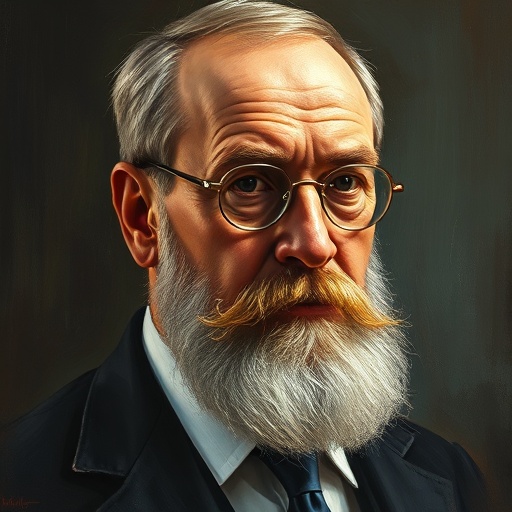
Robert Koch — "My work on tuberculosis was a labor of love."
My work on tuberculosis was a labor of love.
My work on tuberculosis was a labor of love.
Click any product to generate a realistic preview. Up to 3 at a time.
* Initial load can take up to 90 seconds — revising the preview in another color is nearly instant.
"The principles of hygiene are essential for public health."
"The progress of medicine depends on rigorous scientific inquiry."
"The establishment of institutes for infectious diseases is vital for research and treatment."
"My greatest reward is the knowledge that my work has alleviated human suffering."
"The fight against tuberculosis is not a question of science alone, but of social reform."
Found in 1 providers: grok
1 source checked
The quote conveys that Koch's decades-long investigation into tuberculosis was driven by genuine passion rather than professional obligation or ambition. A labor of love means work pursued because it matters deeply, not for reward alone. He is saying the painstaking, often frustrating process of scientific discovery felt personally meaningful and worth every sacrifice — the cause itself justified the effort, giving the work a weight beyond career achievement.
Koch identified Mycobacterium tuberculosis in 1882, announcing it to a stunned Berlin audience after years in underfunded, cramped laboratories developing staining techniques and culture methods that made the discovery possible. Tuberculosis killed roughly one in seven Europeans — the disease was not abstract to him. His Nobel Prize came in 1905. Koch's methodical obsession with proving bacterial causation defined his entire career and transformed medicine from speculation into evidence-based science.
In the 1880s, tuberculosis — called consumption — was the deadliest disease in the industrialized world, killing millions annually across Europe and North America. Germ theory was still fiercely contested; many physicians believed disease arose from miasma or moral weakness. Koch's identification of TB's bacterial cause in 1882 validated Pasteur's germ theory and launched the bacteriological revolution, transforming public health policy and making targeted treatment scientifically conceivable for the first time.
AI-generated insights based on extensive research and information for context. Factual errors? Email [email protected].
Your cart is empty