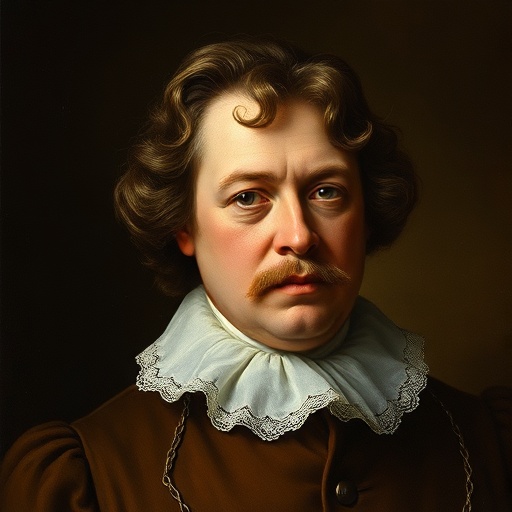
Edward Jenner — "I have never been a lover of controversy; but when truth is concerned, I am not …"
I have never been a lover of controversy; but when truth is concerned, I am not afraid to speak out.
I have never been a lover of controversy; but when truth is concerned, I am not afraid to speak out.
Click any product to generate a realistic preview. Up to 3 at a time.
* Initial load can take up to 90 seconds — revising the preview in another color is nearly instant.
"It is a fact well known to many, that persons who have had the Cow Pox, are for ever after secure from the infection of the Small Pox."
"The cow-pox protects the human constitution from the infection of smallpox."
"...has effectually put a stop to the sneers of those little minded persons who think everything impossible which does not come within the narrow sphere of their own comprehension."
"The practice of vaccination is now so generally adopted, that it is hardly necessary to recommend it."
"I shall not attempt to give a detail of all the cases that have come under my observation, but shall select a few of the most striking, and such as will, I trust, be sufficient to convince the candid …"
Found in 1 providers: grok
1 source checked
The speaker distinguishes between enjoying argument for its own sake and speaking truth when it matters. They are not combative by nature, but when something is genuinely true and important, silence becomes a form of cowardice they refuse to practice. Conviction, not aggression, drives them to speak—truth demands a voice even when controversy is the cost.
Jenner faced fierce opposition from the medical establishment and public when he introduced vaccination in 1796. Colleagues mocked his cowpox-to-smallpox immunity theory as dangerous quackery. Yet he published his findings and defended them relentlessly. This quote captures his temperament precisely: a quiet country physician who became an unlikely revolutionary not through combativeness but through unwillingness to suppress a life-saving truth.
The late 18th century was an era of Enlightenment rationalism clashing with entrenched medical tradition and religious fatalism about disease. Smallpox killed roughly 10% of Europeans annually. Variolation existed but carried real death risk. Jenner's claim that animal disease could confer human immunity violated both medical orthodoxy and theological assumptions about providence, making any public assertion of his findings an act of significant intellectual courage.
AI-generated insights based on extensive research and information for context. Factual errors? Email [email protected].
Your cart is empty