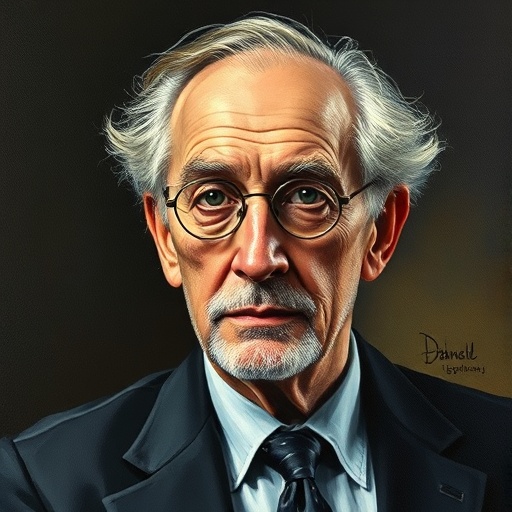
Francis Crick — "If you want to get ahead in science, you have to be prepared to be a bit of a ba…"
If you want to get ahead in science, you have to be prepared to be a bit of a bastard.
If you want to get ahead in science, you have to be prepared to be a bit of a bastard.
Click any product to generate a realistic preview. Up to 3 at a time.
* Initial load can take up to 90 seconds — revising the preview in another color is nearly instant.
"The structure of DNA is a double helix."
"We were searching for a structure so simple and beautiful that it had to be true."
"The truth is rarely pure and never simple."
"The more I learn about science, the more I realize that there is no God."
"A theory that fits all the facts is bound to be wrong, as some of the facts will be wrong."
Found in 1 providers: grok
1 source checked
To succeed in a competitive field, you must be willing to pursue your goals aggressively, even if it means being ruthless, stepping on colleagues' toes, or refusing to be deferential. Success requires a certain hardness — claiming credit confidently, challenging others without apology, and prioritizing your ambitions over social niceties. It's a frank admission that academic achievement and nice-guy behavior often conflict.
Crick was famously blunt and competitive. He and Watson used Rosalind Franklin's X-ray diffraction data — Photo 51 — without her knowledge or proper credit, a move many historians consider ethically questionable. Crick was known for dismissing weak ideas sharply, dominating conversations, and relentlessly challenging peers. His own self-description acknowledged this combative streak as essential to cracking problems others couldn't.
The early 1950s race to decode DNA was brutally competitive — Watson and Crick at Cambridge, Linus Pauling at Caltech, and Franklin and Wilkins at King's College London all converging simultaneously. Post-WWII science expanded rapidly under Cold War funding pressure and an emerging publish-or-perish culture. Priority disputes, data secrecy, and credit battles were common. The stakes — Nobel Prizes and institutional prestige — made ruthlessness practically rational.
AI-generated insights based on extensive research and information for context. Factual errors? Email [email protected].
Your cart is empty