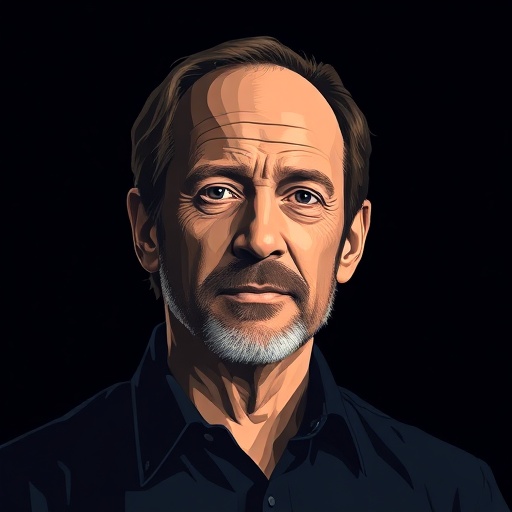
Tim Berners-Lee — "The web is a tool for democracy, and we need to protect it from those who would …"
The web is a tool for democracy, and we need to protect it from those who would undermine it.
The web is a tool for democracy, and we need to protect it from those who would undermine it.
Click any product to generate a realistic preview. Up to 3 at a time.
* Initial load can take up to 90 seconds — revising the preview in another color is nearly instant.
"The web was designed to connect people, not to manipulate them."
"The web was designed to be a decentralized platform, but it has become increasingly centralized. This is a problem."
"I'm not a fan of the term 'Web 2.0.' It implies that the web is a finished product, which it's not."
"I was really annoyed when I found out people were using the web to look at pornography."
"I’m worried about the future of the web, but I’m also optimistic."
British computer scientist who invented the World Wide Web at CERN in 1989 and founded the W3C, championing open web standards. Closely associated with Vint Cerf (TCP/IP co-creator and 'father of the internet') and Marc Andreessen (Mosaic browser creator and Netscape co-founder). For an intellectual contrast, see Mark Zuckerberg, Facebook (Meta) founder — Zuckerberg's walled-garden Facebook is the canonical contemporary opposite of Berners-Lee's open-web vision; Berners-Lee's Solid project and 'recapture the web' essays are explicitly written as a rebuttal to the platform-monopoly model Facebook pioneered.
Found in 1 providers: grok
1 source checked
The internet is not merely a technology but a civic instrument that gives ordinary people access to information, voice, and participation in public life. Protecting it means resisting corporate monopolies, government censorship, surveillance overreach, and algorithmic manipulation that concentrate power among the few and diminish the many's ability to communicate, organize, and hold institutions accountable.
Berners-Lee invented the Web in 1989 and deliberately released it royalty-free, rejecting personal wealth to keep it open. He later founded the World Wide Web Consortium and the Web Foundation specifically to defend its open architecture. His Solid project and campaigns against data exploitation show this is a lifelong conviction, not rhetoric, rooted in his belief that decentralized access equals democratic participation.
Written against a backdrop of platform consolidation, GDPR battles, net neutrality repeal, Cambridge Analytica's data scandal, and authoritarian governments erecting national firewalls. By the mid-2010s and beyond, the Web Berners-Lee envisioned as a commons was fragmenting into walled gardens controlled by a handful of corporations, making democratic access to an open web a genuinely contested political question rather than a technical given.
AI-generated insights based on extensive research and information for context. Factual errors? Email [email protected].
Your cart is empty