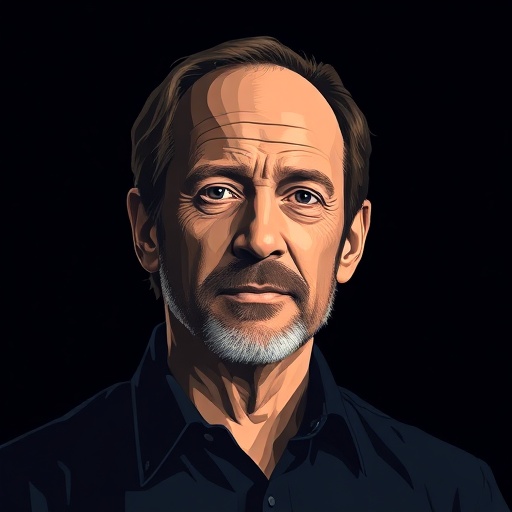
Tim Berners-Lee — "The web was designed to be a decentralized platform, but it has become increasin…"
The web was designed to be a decentralized platform, but it has become increasingly centralized. This is a problem.
The web was designed to be a decentralized platform, but it has become increasingly centralized. This is a problem.
Click any product to generate a realistic preview. Up to 3 at a time.
* Initial load can take up to 90 seconds — revising the preview in another color is nearly instant.
"I'm not a fan of the term 'Web 2.0.' It implies that the web is a finished product, which it's not."
"We need to build a web that is truly for everyone, where everyone has a voice."
"I'm still optimistic about the future of the web. I believe we can fix it."
"The web is now controlled by a handful of powerful companies."
"The web is a platform for innovation, and we need to keep it open for new ideas."
British computer scientist who invented the World Wide Web at CERN in 1989 and founded the W3C, championing open web standards. Closely associated with Vint Cerf (TCP/IP co-creator and 'father of the internet') and Marc Andreessen (Mosaic browser creator and Netscape co-founder). For an intellectual contrast, see Mark Zuckerberg, Facebook (Meta) founder — Zuckerberg's walled-garden Facebook is the canonical contemporary opposite of Berners-Lee's open-web vision; Berners-Lee's Solid project and 'recapture the web' essays are explicitly written as a rebuttal to the platform-monopoly model Facebook pioneered.
Found in 1 providers: grok
1 source checked
The internet was built so no single company or government could control it — power spread across millions of independent servers. Instead, a handful of giant platforms now dominate where people communicate, shop, and get information. That concentration of control undermines the original promise of an open, resilient, democratic network accessible to everyone equally.
Berners-Lee invented the Web in 1989 at CERN, deliberately making it royalty-free and open. He founded the World Wide Web Consortium to keep it open-standard. Watching Google, Facebook, and Amazon absorb the majority of web traffic directly contradicts his foundational design philosophy. He launched the Contract for the Web and Solid project specifically to reclaim decentralization.
By the 2010s, a few platforms controlled most online activity — Facebook owned social media, Google dominated search and advertising, Amazon controlled cloud infrastructure. Governments debated antitrust action. Cambridge Analytica demonstrated how centralized data creates systemic risks. Berners-Lee made this observation as calls for platform regulation and data-sovereignty frameworks intensified globally.
AI-generated insights based on extensive research and information for context. Factual errors? Email [email protected].
Your cart is empty