What it means
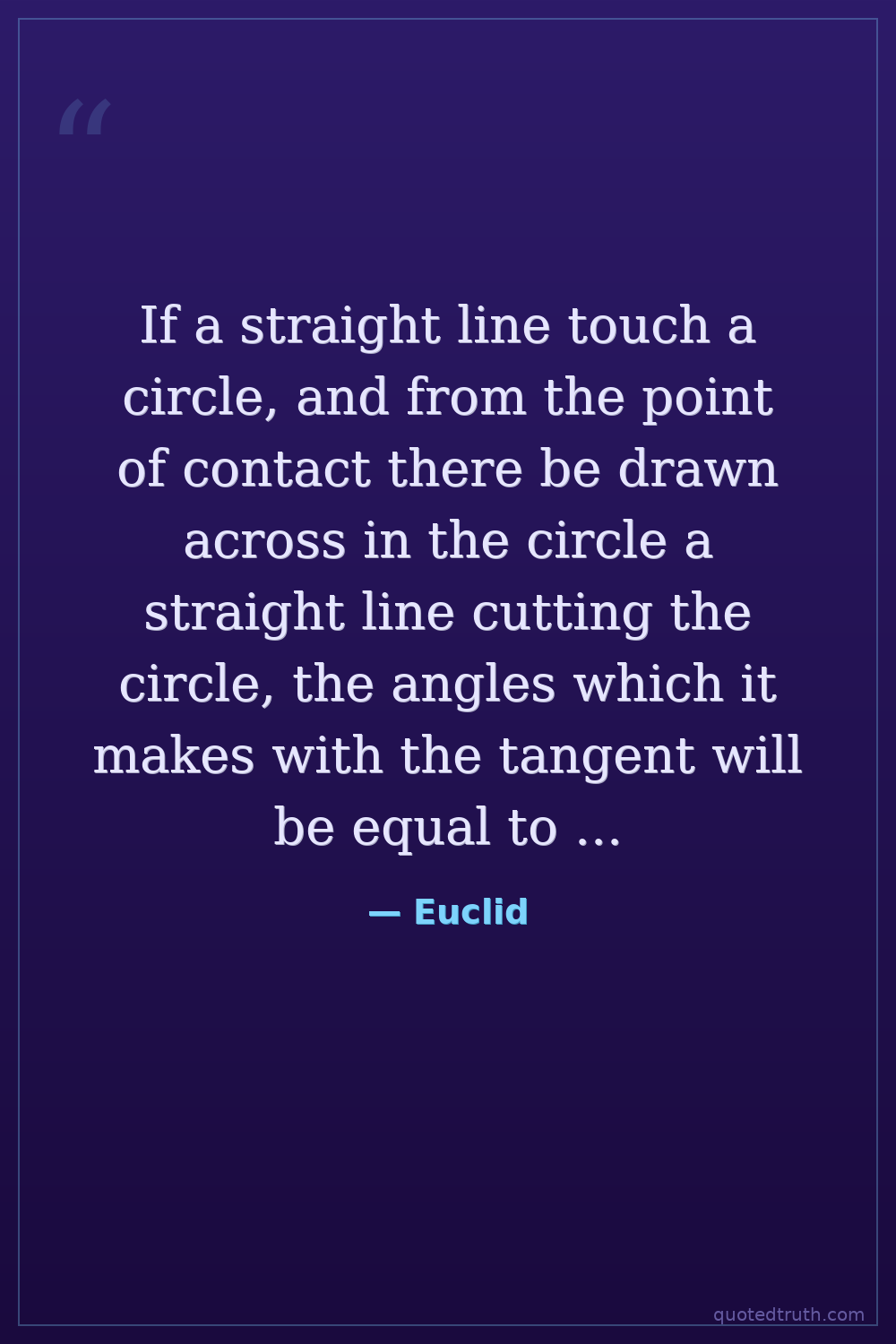
When a line touches a circle at exactly one point, and another line is drawn from that contact point through the circle, the angles formed between the cutting line and the tangent equal the angles found in the opposite arc segments. In plain terms: touching and crossing a circle creates perfectly balanced, predictable angle relationships that hold true universally, every time, without exception.
Relevance to Euclid
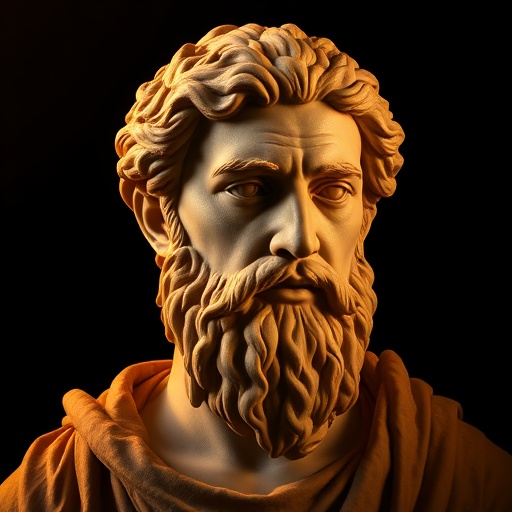
Euclid spent his career at Alexandria systematically proving geometry's hidden order. This proposition appears in his Elements, the work that defined mathematical rigor for two millennia. It reflects his core method: taking observable shapes and deriving absolute truths through logical proof, trusting that circles and lines obey consistent laws discoverable by pure reason alone.
The era
Around 300 BCE, Alexandria was the intellectual capital of the Hellenistic world, drawing scholars across the Mediterranean. Greek thinkers believed the cosmos operated on rational, geometric principles. Euclid's Elements codified this conviction at a moment when mathematics was transitioning from practical measurement toward abstract proof, establishing a deductive framework that would govern mathematics, astronomy, and philosophy for over two thousand years.
AI-generated insights based on extensive research and information for context. Factual errors? Email [email protected].