What it means
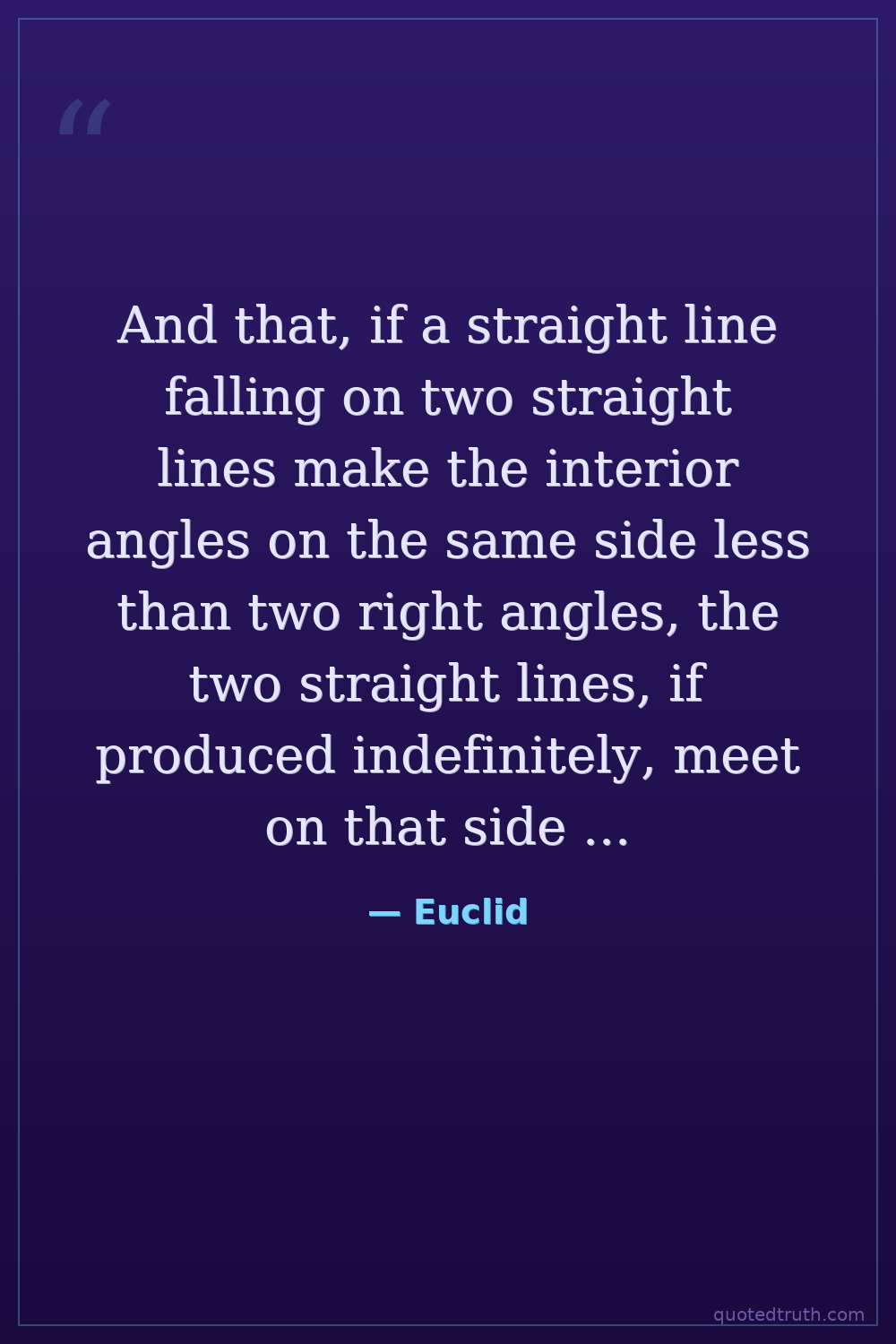
If a line crosses two other lines and the interior angles on one side together measure less than 180 degrees, those two lines will eventually intersect on that same side when extended far enough. In plain terms: non-parallel lines that lean toward each other will always meet. This defines the geometric condition for convergence versus parallelism, anchoring how straight lines behave in flat space.
Relevance to Euclid
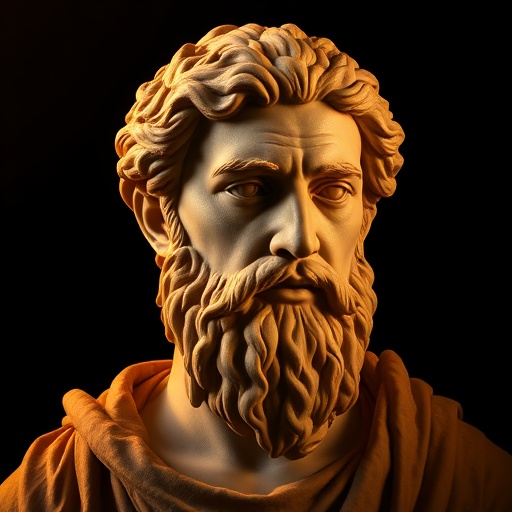
This is Euclid's infamous Fifth Postulate from Elements, written around 300 BCE. Unlike his first four postulates, its complexity nagged mathematicians for two millennia — they suspected it could be derived from the others. Euclid's instinct to include it anyway reveals his commitment to intellectual honesty over elegance. His reluctance to assume parallelism without explicit foundation proved prescient when non-Euclidean geometries finally emerged.
The era
Around 300 BCE in Alexandria, Greek thinkers were systematizing knowledge through axioms and deductive proof — a radical departure from empirical observation. Under Ptolemy I's patronage, the Library of Alexandria became a hub for this work. Geometry was not abstract play but essential for land surveying, architecture, and navigation. Formalizing when lines meet had direct practical stakes alongside its philosophical demand for rigorous logical foundations.
AI-generated insights based on extensive research and information for context. Factual errors? Email [email protected].