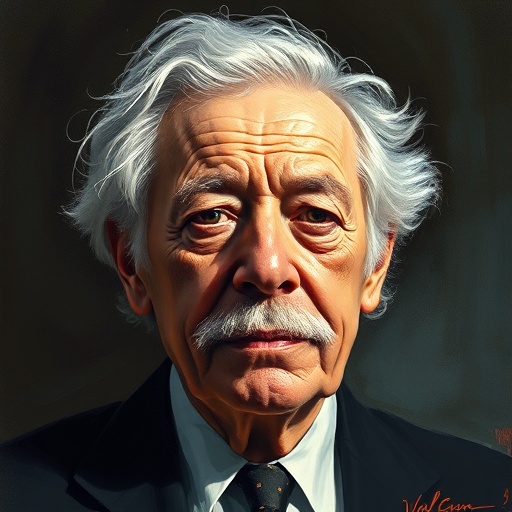
Linus Pauling — "War is the greatest evil."
War is the greatest evil.
War is the greatest evil.
Click any product to generate a realistic preview. Up to 3 at a time.
* Initial load can take up to 90 seconds — revising the preview in another color is nearly instant.
"The most important thing in life is to be happy, and to make others happy."
"The scientific method is a never-ending process of observation, hypothesis, experiment, and revision."
"I am not interested in fame or fortune. I am interested in truth."
"The human body can make a number of substances, but it cannot make vitamin C."
"The structure of DNA is a beautiful thing."
Found in 1 providers: grok
1 source checked
War represents the worst harm humans can inflict on each other and the world. It destroys lives, communities, and civilization's progress. This isn't just about battlefield death—it encompasses the suffering, displacement, poverty, and psychological damage war causes across generations. The statement is a moral absolute: no political goal, territorial gain, or ideological victory justifies the catastrophic human cost that organized armed conflict inevitably produces.
Pauling won two Nobel Prizes—Chemistry in 1954 and Peace in 1962—making him uniquely positioned to speak on war's devastation. After helping develop explosives science during WWII, he became horrified by nuclear weapons he understood chemically. He circulated the Pauling Petition, gathering 11,000 scientist signatures opposing nuclear testing, and testified before the UN. His antiwar activism nearly cost him his passport and was investigated by McCarthy-era committees.
Pauling's most active peace work spanned the Cold War's nuclear arms race, particularly the 1950s-60s when US-Soviet tensions made global annihilation genuinely plausible. Above-ground nuclear tests were contaminating food supplies with strontium-90. Korea and Vietnam demonstrated conventional war's ongoing horror. Scientists like Pauling felt moral responsibility after witnessing Hiroshima's aftermath, driving the international movement that produced the 1963 Partial Nuclear Test Ban Treaty.
AI-generated insights based on extensive research and information for context. Factual errors? Email [email protected].
Your cart is empty