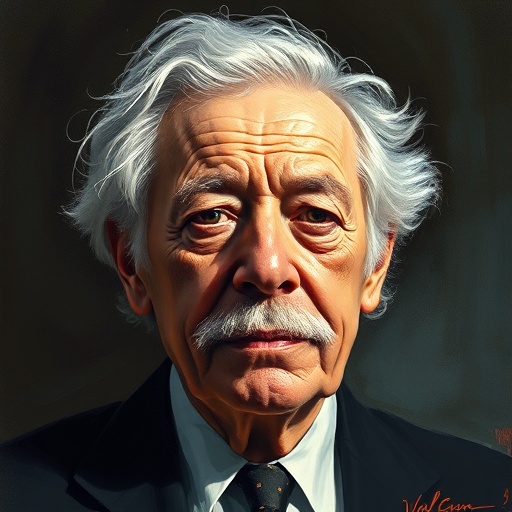
Linus Pauling — "The most important thing in life is to be happy, and to make others happy."
The most important thing in life is to be happy, and to make others happy.
The most important thing in life is to be happy, and to make others happy.
Click any product to generate a realistic preview. Up to 3 at a time.
* Initial load can take up to 90 seconds — revising the preview in another color is nearly instant.
"Science is the search for truth -- it is not a game in which one tries to beat his opponent, to do harm to others."
"I have always been a rebel, and I believe that it is important to challenge authority."
"I believe that science and ethics are inextricably linked, and that we have a responsibility to use our knowledge wisely."
"I like people. I like animals, too—whales and quail, dinosaurs and dodos. But I like human beings especially, and I am unhappy that the pool of human germ plasm, which determines the nature of the hum…"
"The greatest discoveries of science have always been made by those who were not afraid to challenge the existing paradigms."
Found in 1 providers: grok
1 source checked
Happiness matters most — both experiencing it yourself and actively generating it in others. This isn't passive contentment but a deliberate orientation toward joy as life's central purpose. It frames human flourishing as inherently relational: your own happiness is incomplete without contributing to others'. A simple but radical claim that cuts against achievement, status, and accumulation as life's organizing principles.
Pauling won two unshared Nobel Prizes — Chemistry in 1954 and Peace in 1962 — yet spent his later decades fighting nuclear weapons testing despite government harassment and passport revocation. His vitamin C advocacy, however controversial, stemmed from wanting to reduce human suffering. His life shows someone who defined success through contribution to others' wellbeing, not purely through scientific accolades.
Pauling's most active decades spanned the Manhattan Project, Cold War nuclear escalation, and the McCarthy era. Scientists faced intense pressure to prioritize national security over humanitarian concerns. His peace activism emerged when nuclear annihilation was a genuine daily threat. In that context, asserting happiness — rather than power, deterrence, or ideological victory — as life's purpose was a pointed moral and political statement.
AI-generated insights based on extensive research and information for context. Factual errors? Email [email protected].
Your cart is empty