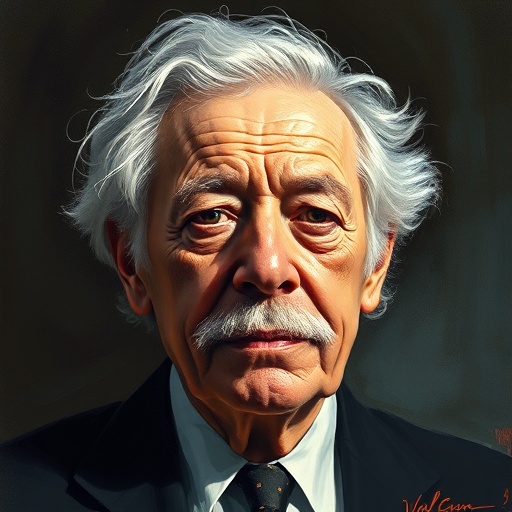
Linus Pauling — "The best way to predict the future is to create it."
The best way to predict the future is to create it.
The best way to predict the future is to create it.
Click any product to generate a realistic preview. Up to 3 at a time.
* Initial load can take up to 90 seconds — revising the preview in another color is nearly instant.
"I had something of a shock when I went to Europe in 1926 and discovered that there were a good number of people around that I thought to be smarter than me."
"Vitamin C is the best natural antihistamine."
"I believe that the human race has the ability to solve all of its problems, if we only work together."
"I have always been interested in the human body and how it works."
"I think that the vitamin C story is a very important story, and it's a story that has not yet been told in its entirety."
Found in 1 providers: grok
1 source checked
Instead of trying to guess what will happen, shape outcomes through deliberate action. Waiting passively for the future cedes control to circumstance. Real power lies in making choices, building structures, and pursuing goals that actively define what comes next. The future isn't a fixed destination discovered through analysis — it's a construction site, and those who build with intention determine where things end up rather than merely reacting to where they arrive.
Pauling embodied this across two domains. In chemistry, he didn't wait for molecular structures to reveal themselves — he devised quantum mechanical models that explained chemical bonding before instruments could confirm it. In politics, he refused to accept nuclear catastrophe as inevitable, organizing thousands of scientists into the 1958 Pauling Petition that pressured the 1963 Partial Nuclear Test Ban Treaty. Two Nobel Prizes, two entirely different futures he chose to build rather than predict.
The mid-20th century made civilizational collapse feel probable, not theoretical. The US-Soviet arms race accelerated after the 1949 Soviet nuclear test and the 1952 hydrogen bomb. McCarthyism punished those who challenged the trajectory — Pauling's passport was revoked for years. Amid pervasive Cold War fatalism, a generation of activist scientists argued that human agency, not geopolitical momentum, would decide survival. The emerging UN framework and test-ban movement were direct assertions that intentional action could redirect history.
AI-generated insights based on extensive research and information for context. Factual errors? Email [email protected].
Your cart is empty