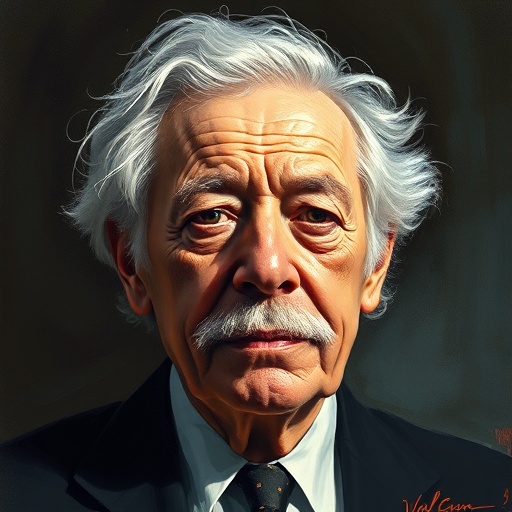
Linus Pauling — "Vitamin C is the best natural antihistamine."
Vitamin C is the best natural antihistamine.
Vitamin C is the best natural antihistamine.
Click any product to generate a realistic preview. Up to 3 at a time.
* Initial load can take up to 90 seconds — revising the preview in another color is nearly instant.
"I am not interested in fame or fortune. I am interested in truth."
"The human body can make a number of substances, but it cannot make vitamin C."
"Science is the search for truth -- it is not a game in which one tries to beat his opponent, to do harm to others."
"I have always been a humanitarian, and I believe that we should all work to make the world a better place for everyone."
"I believe that science and ethics are inextricably linked, and that we have a responsibility to use our knowledge wisely."
Found in 1 providers: deepseek
1 source checked
Vitamin C suppresses histamine — the chemical your immune system releases during allergic reactions, causing sneezing, itching, and congestion. Pauling argued that high-dose ascorbic acid lowers circulating histamine levels in the blood, reducing allergy symptoms more safely than synthetic antihistamine drugs. The claim positions a common nutrient as a pharmacological alternative, suggesting the body's chemistry can be optimized through nutrition rather than manufactured compounds.
Pauling won two unshared Nobel Prizes — Chemistry in 1954 and Peace in 1962 — but his late career became consumed by orthomolecular medicine, particularly megadose Vitamin C. His 1970 book 'Vitamin C and the Common Cold' sparked mass public interest. He took gram-level doses daily and died at 93. This quote reflects his core conviction that biochemical optimization through nutrients, not pharmaceuticals, was the frontier of human health.
From the 1960s through the 1990s, pharmaceutical antihistamines like Benadryl dominated allergy treatment but caused drowsiness and dependency concerns. Simultaneously, a growing natural health movement challenged synthetic drug culture. Pauling's Vitamin C advocacy arrived as Americans increasingly questioned medical orthodoxy, embraced supplement culture, and debated whether the pharmaceutical industry suppressed nutritional solutions. His scientific credibility gave these alternative claims unusual mainstream traction and legitimacy.
AI-generated insights based on extensive research and information for context. Factual errors? Email [email protected].
Your cart is empty