What it means
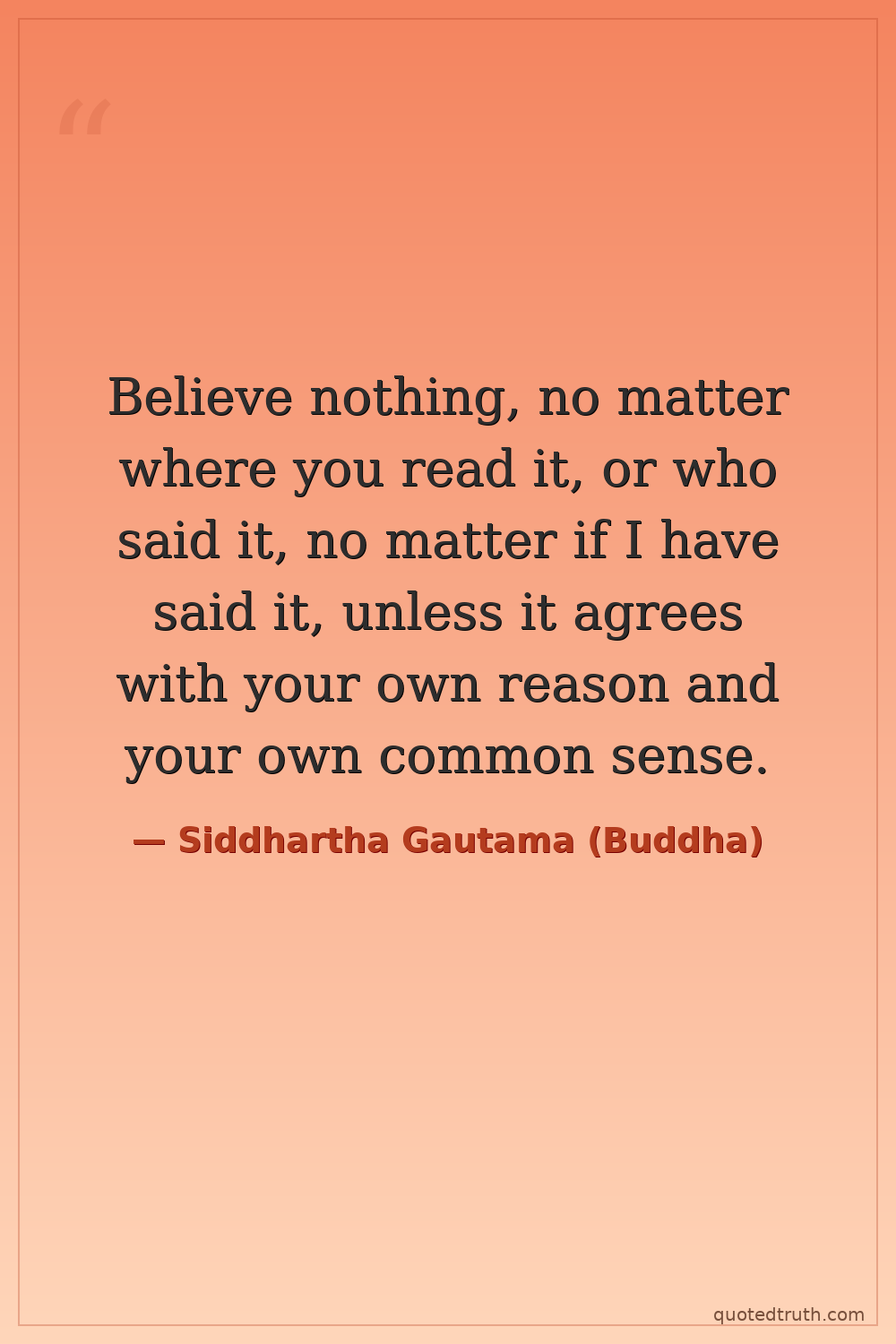
Don't accept any claim as true just because it appears in a respected book, comes from an authority figure, or is repeated by tradition. Test every idea against your own reasoning and lived experience first. Even teachings from trusted teachers should be examined critically rather than swallowed whole. Truth has to make sense to you and hold up under honest scrutiny before it earns your belief.
Relevance to Siddhartha Gautama (Buddha)
The Buddha left a life of royal privilege and spent years testing the spiritual doctrines of his era through direct practice, rejecting those that failed him before discovering his own path. He consistently urged disciples to verify his teachings experientially rather than accept them on his authority. This stance defined his pedagogy: dharma was a method to be tested, not dogma to be obeyed, mirroring his own questioning departure from Vedic orthodoxy.
The era
Around the 5th century BCE in northern India, religious life was dominated by Brahmin priests whose authority rested on Vedic scripture, ritual sacrifice, and inherited caste. Truth was something handed down, not investigated. The Buddha emerged amid the shramana movement of wandering ascetics who questioned that priestly monopoly, and his appeal to personal reason was radical: it bypassed both scripture and clergy, offering ordinary people a direct method for verifying spiritual claims themselves.
AI-generated insights based on extensive research and information for context. Factual errors? Email [email protected].