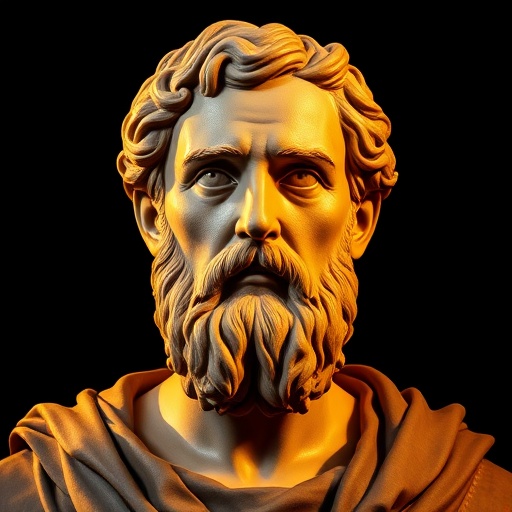
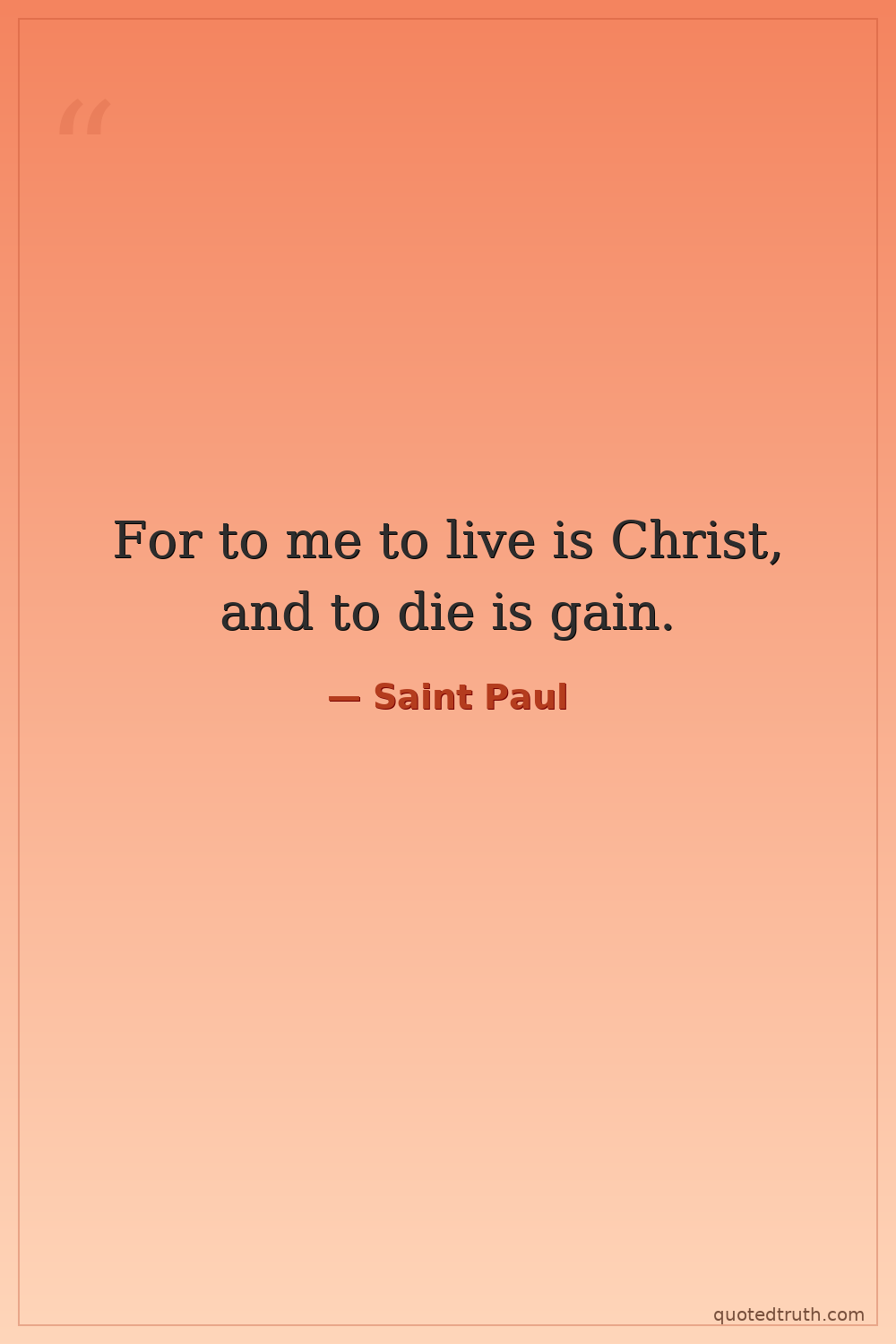
Saint Paul — "For to me to live is Christ, and to die is gain."
For to me to live is Christ, and to die is gain.
For to me to live is Christ, and to die is gain.
Click any product to generate a realistic preview. Up to 3 at a time.
* Initial load can take up to 90 seconds — revising the preview in another color is nearly instant.
"For I determined not to know any thing among you, save Jesus Christ, and him crucified."
"Do not be deceived: God cannot be mocked. A man reaps what he sows."
"If any man seem to be contentious, we have no such custom, neither the churches of God."
"If anyone thinks that he is something when he is nothing, he deceives himself."
"Submit to one another out of reverence for Christ."
Found in 1 providers: grok
1 source checked
Living entirely means being devoted to Christ, making every action an expression of that relationship. Dying is not a loss but an upgrade, bringing a closer union with Christ in the afterlife. Either outcome is a win. The speaker finds purpose so completely in this commitment that neither continued existence nor death holds fear, since both deepen the same bond that defines his identity.
Paul wrote this from a Roman prison awaiting possible execution, showing his willingness to die for his mission. After his conversion on the road to Damascus, he abandoned his former life as a Pharisee persecuting Christians and spent decades traveling the Mediterranean planting churches. His singular focus on Christ shaped his letters, his endurance through shipwrecks, beatings, and imprisonments, and ultimately his martyrdom in Rome around 64-67 AD.
First-century Roman Empire treated Christianity as a suspicious Jewish sect, and Emperor Nero soon blamed Christians for the Great Fire of Rome in 64 AD, launching brutal persecutions. Executions, crucifixions, and arena deaths were routine tools of Roman control. For believers facing this violence, Paul's calm indifference to death offered a radical reframing: martyrdom as gain rather than defeat. The statement also contrasted sharply with Greco-Roman views that death was a shadowy diminishment.
AI-generated insights based on extensive research and information for context. Factual errors? Email [email protected].
Your cart is empty