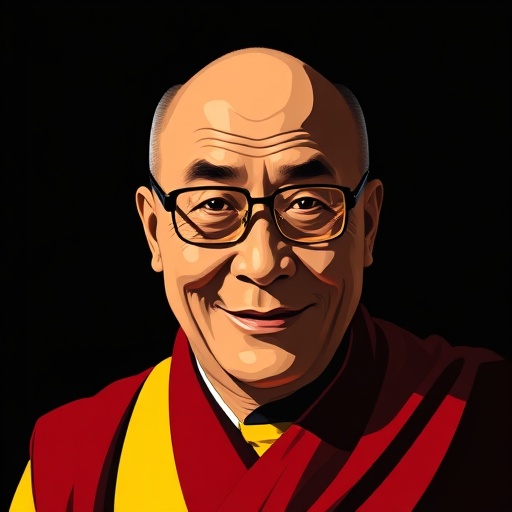
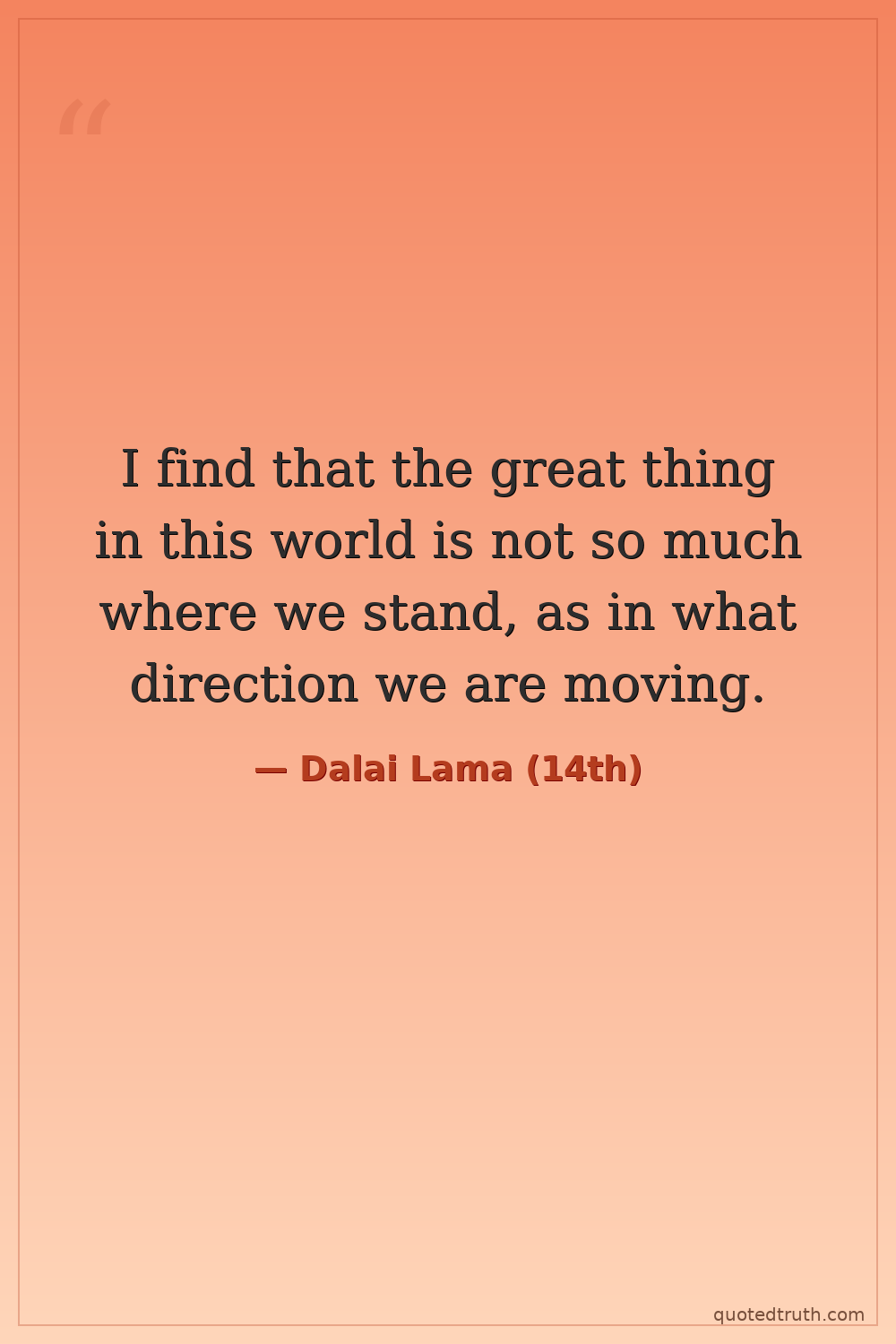
Dalai Lama (14th) — "I find that the great thing in this world is not so much where we stand, as in w…"
I find that the great thing in this world is not so much where we stand, as in what direction we are moving.
I find that the great thing in this world is not so much where we stand, as in what direction we are moving.
Click any product to generate a realistic preview. Up to 3 at a time.
* Initial load can take up to 90 seconds — revising the preview in another color is nearly instant.
"I am a Marxist monk."
"I am just one human being. I am not special."
"The planet is our only home, and we must protect it."
"I remain convinced that the basic human nature is gentle and compassionate."
"We can never obtain peace in the outer world until we make peace with ourselves."
Found in 1 providers: grok
1 source checked
The core message is that trajectory matters more than current position. Where you're headed — your direction, growth, and intentions — defines you far more than your present circumstances or status. Whether in poverty or wealth, obscurity or fame, what matters is whether you're moving toward something better. It rejects fixation on fixed snapshots of achievement and embraces movement, progress, and purpose as the true measures of a meaningful life.
The 14th Dalai Lama, Tenzin Gyatso, has lived this truth. Exiled from Tibet since 1959 after China's occupation, he never let lost position define him. His Buddhist teachings center on the path — compassion, continuous growth, and the middle way — over fixed outcomes. His Nobel Peace Prize (1989) and decades of global advocacy show a life defined not by what was taken from him, but by the direction he chose.
Tenzin Gyatso came of age during Tibet's invasion (1950), Cold War proxy conflicts, and decolonization movements reshaping the world. His era saw unprecedented displacement — millions of refugees defined by where they were uprooted from, not where they headed. Simultaneously, Western culture's obsession with status intensified. His message, delivered amid these upheavals, offered a counter-narrative: direction and intention outlast circumstance, a truth urgently needed then and now.
AI-generated insights based on extensive research and information for context. Factual errors? Email [email protected].
Your cart is empty