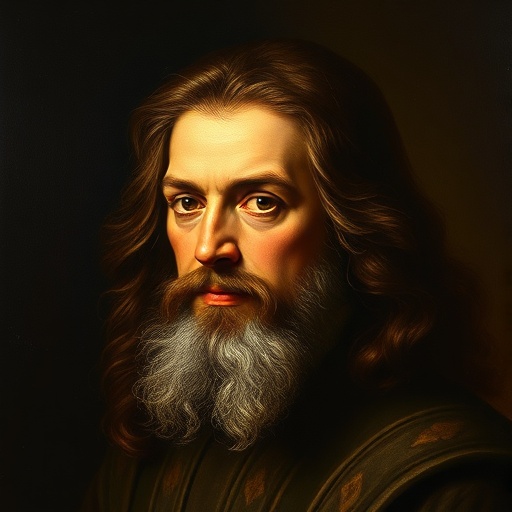
Leonardo da Vinci — "Learning never exhausts the mind."
Learning never exhausts the mind.
Learning never exhausts the mind.
Click any product to generate a realistic preview. Up to 3 at a time.
* Initial load can take up to 90 seconds — revising the preview in another color is nearly instant.
"The water that you touch in a river is the last of that which has passed, and the first of that which comes; so with present time."
"Truth was the only daughter of time."
"The noblest pleasure is the joy of understanding."
"The mind of the painter is a mirror of the world."
"Obstacles cannot crush me. Every obstacle yields to stern resolve."
Found in 1 providers: grok
1 source checked
Acquiring knowledge doesn't deplete or fatigue the mind the way physical labor drains the body. Instead, intellectual engagement is self-sustaining — curiosity feeds more curiosity. The mind has no storage limit that fills up and stops working. This rejects the idea that studying hard is exhausting or that there's a point where a person has learned enough. Learning is presented as inherently restorative, not costly.
Da Vinci had no university degree yet dissected corpses to study anatomy, designed war machines, mapped water currents, painted the Mona Lisa, and filled 13,000 notebook pages across dozens of disciplines. He taught himself Latin in his forties. His life was the proof of this claim — decades of voracious, cross-disciplinary inquiry showed no sign of mental fatigue or narrowing curiosity, only acceleration.
Da Vinci worked during the Italian Renaissance (1452–1519), when medieval scholasticism — learning through theological authority and received texts — was collapsing under humanist pressure. Direct observation of nature was becoming legitimate. The printing press was multiplying available knowledge rapidly. Yet formal schooling remained a privilege of clergy and nobility, making self-directed lifelong learning a radical intellectual stance, not an obvious one.
AI-generated insights based on extensive research and information for context. Factual errors? Email [email protected].
Your cart is empty