What it means
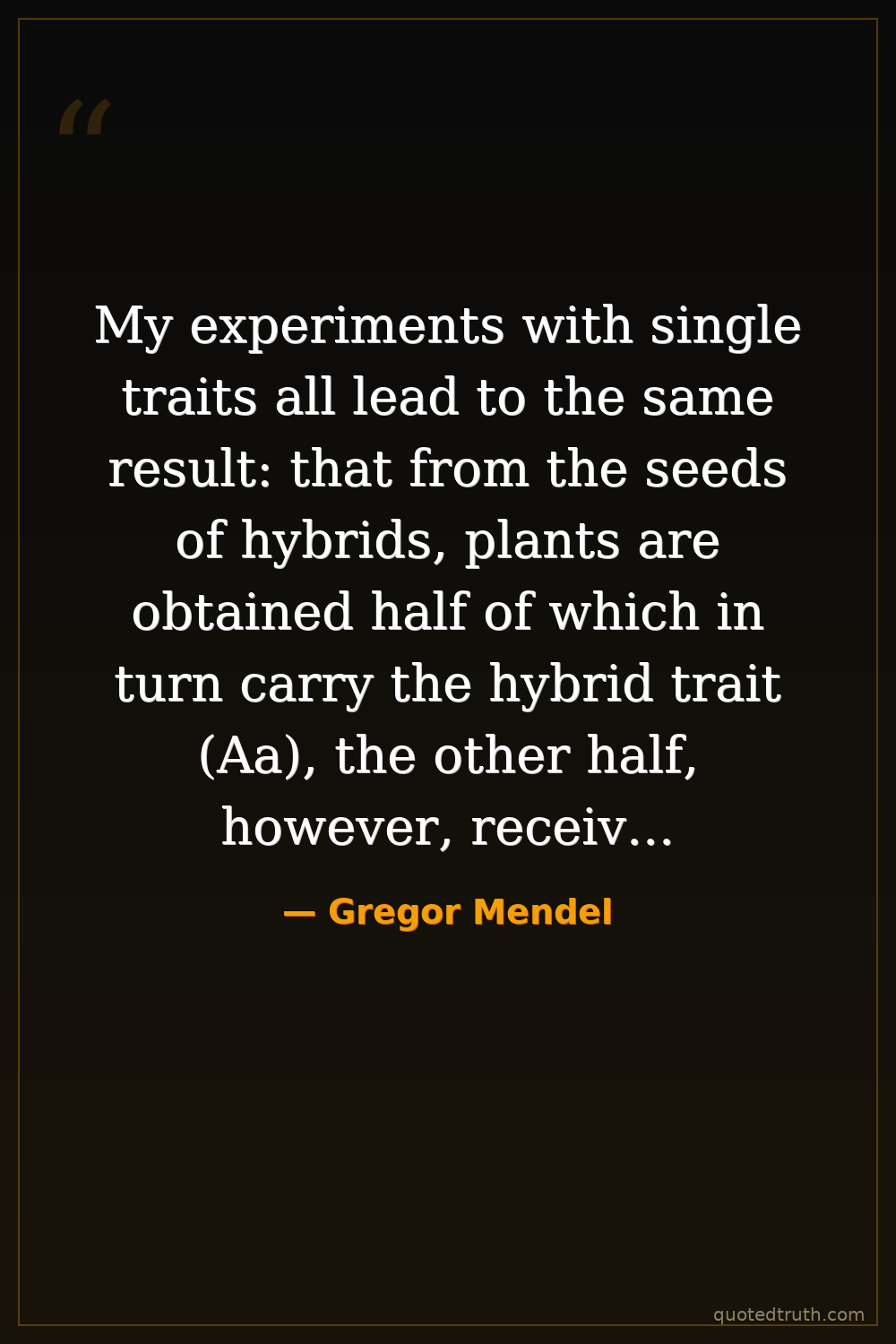
When hybrid plants reproduce, their offspring don't blend uniformly—they split into predictable categories. Half carry the hybrid combination of both parental traits, while the remaining half divide equally between each pure parental form. This revealed that heredity follows strict mathematical rules: discrete units now called alleles segregate during reproduction and recombine in fixed ratios. Inheritance is not random blending but a precise, countable process—the foundational insight of all modern genetics.
Relevance to Gregor Mendel
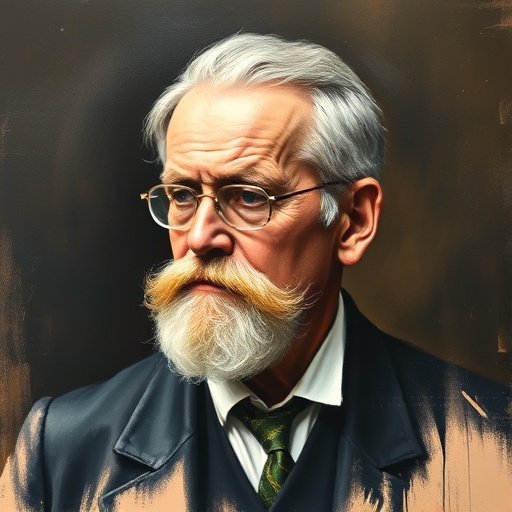
Mendel spent eight years cultivating over 29,000 pea plants in the Augustinian monastery garden in Brno, recording each trait with obsessive precision. A friar and natural science teacher, he merged mathematical rigor with biological observation—unusual for the era. This quote captures his core method: repeat experiments across thousands of specimens, quantify outcomes, find the ratio. His monastic discipline produced laws that went unrecognized for 34 years after his 1866 publication.
The era
Mendel published these findings in 1866, seven years after Darwin's On the Origin of Species sparked urgent debate over how traits transmit across generations. Scientists widely accepted blending inheritance—traits mixing like paint. No concept of chromosomes or genes existed, and cell division mechanisms were unknown. Mendel's statistical approach was revolutionary but opaque to biologists untrained in mathematics. His paper was cited only three times before 1900, when three researchers independently rediscovered it, finally founding genetics as a discipline.
AI-generated insights based on extensive research and information for context. Factual errors? Email [email protected].