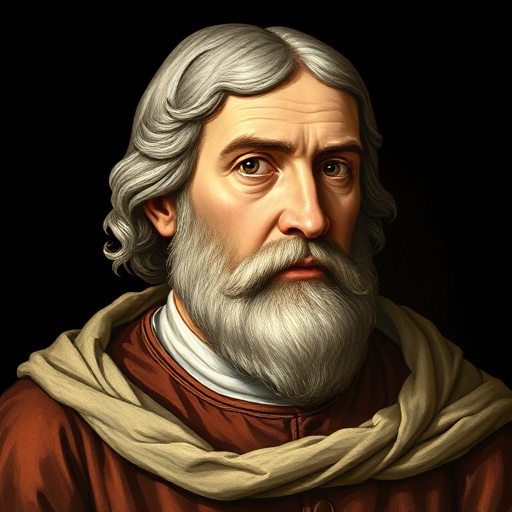
Thomas Aquinas — "If a man commits the sin of sodomy, he is to be put to death."
If a man commits the sin of sodomy, he is to be put to death.
If a man commits the sin of sodomy, he is to be put to death.
Click any product to generate a realistic preview. Up to 3 at a time.
* Initial load can take up to 90 seconds — revising the preview in another color is nearly instant.
"It is a greater sin to steal from a rich man than from a poor man."
"Slavery is a consequence of sin, and thus it is just."
"For a woman is an imperfect man."
"The virtue of chastity is a part of temperance."
"The intellect is the highest power of the soul."
Found in 1 providers: grok
1 source checked
The statement declares that men who engage in same-sex sexual acts deserve execution. In medieval moral thinking, this wasn't merely a religious opinion but a legal and civil claim: that certain acts so violate natural order that they forfeit the actor's right to life. It reflects a worldview where divine law, natural law, and civil law were considered unified and mutually reinforcing.
Aquinas built his moral theology around natural law — the idea that human reason can discern God's purposes through nature. He categorized sodomy as a 'sin against nature,' more serious than fornication or adultery, because it corrupted the procreative end of sex itself. His Summa Theologica treats this as philosophically grounded, not merely scriptural — Aristotelian teleology applied directly to human sexuality.
In 13th-century Christendom, church and civil law were deeply intertwined. Sodomy was a criminal offense across Christian Europe, and capital punishment for it had Roman legal precedent — the Justinian Code prescribed death. Aquinas wrote during active Inquisition campaigns; theological deviation and moral disorder were treated as civic threats. Death for sodomy was legally standard, not fringe, in his time.
AI-generated insights based on extensive research and information for context. Factual errors? Email [email protected].
Your cart is empty