Pope Urban II — "When you have decided to go, you must publicly make your vow and dedicate yourse…"
When you have decided to go, you must publicly make your vow and dedicate yourselves to God.
When you have decided to go, you must publicly make your vow and dedicate yourselves to God.
Click any product to generate a realistic preview. Up to 3 at a time.
* Initial load can take up to 90 seconds — revising the preview in another color is nearly instant.
"Let those who have formerly contended against their brothers and relatives now fight as they ought against the barbarians."
"Let the holy sepulcher of the Lord our Savior, which is possessed by unclean nations, especially incite you, and the holy places which are now treated with ignominy and irreverently polluted with thei…"
"For your brethren who live in the East are in urgent need of your help... the Turks and Arabs have attacked them."
"Whatever Christians still remain in hiding there are sought out with unheard of tortures."
"Take the road to the Holy Sepulchre and wrench the land from that wicked race."
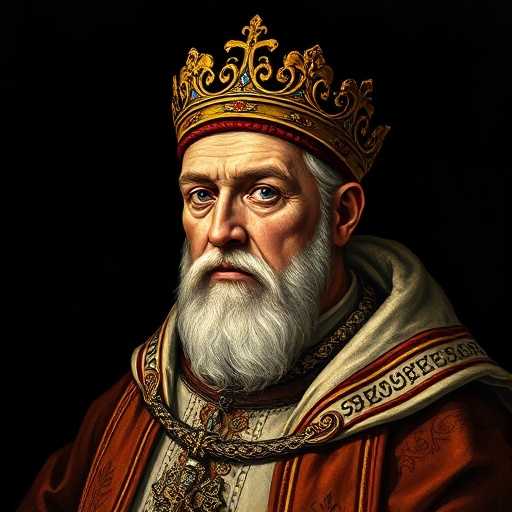
Pope (1088-1099) whose Council of Clermont speech (November 1095) launched the First Crusade — the founding event of nine centuries of Christian-Muslim military conflict. Closely associated with Pope Gregory VII (his predecessor on papal-imperial reform). For an intellectual contrast, see Saladin, Kurdish-Muslim Sultan of Egypt and Syria (1138-1193) — Saladin recaptured Jerusalem in 1187, undoing the First Crusade Urban II launched 92 years earlier. Saladin's chivalrous treatment of Christian prisoners became the canonical Muslim counter-image to Crusader brutality. The cleanest before/after pairing of the Crusades' moral arc.
Found in 1 providers: grok
1 source checked
Once you resolve to take up a righteous cause, that commitment must be declared openly before witnesses and consecrated to God. The quote demands no private, half-hearted loyalty—public proclamation transforms personal intention into a solemn, binding obligation. It reflects the idea that genuine dedication requires accountability to both a community and a higher power, making retreat or wavering a moral failure rather than mere inconvenience.
Urban II, born Odo of Châtillon around 1042, was a Cluniac monk before becoming pope—an order built on communal vows, liturgical discipline, and collective witness. His landmark 1095 Council of Clermont sermon launched the First Crusade by calling on knights to take the cross publicly. As a Church reformer, he understood that commitments witnessed by community and God carried enforceable moral weight. Crusade vows were legal instruments; Urban used them to bind armies to a holy mission.
In 11th-century Christendom, a publicly sworn vow was simultaneously a legal contract and a sacred act—breaking one risked excommunication and social ruin. The Seljuk Turks had captured Jerusalem in 1076, blocking Christian pilgrimage and alarming Byzantine Emperor Alexios I, who appealed to Rome. Urban harnessed feudal oath culture: by demanding public vows at Clermont, he converted individual piety into mass military commitment, knowing the shame of breaking an oath before God would hold recruits more firmly than any contract.
AI-generated insights based on extensive research and information for context. Factual errors? Email [email protected].
Your cart is empty